Rafael Nadal vs. Novak Djokovic – The Defining Rivalry of Modern Sport
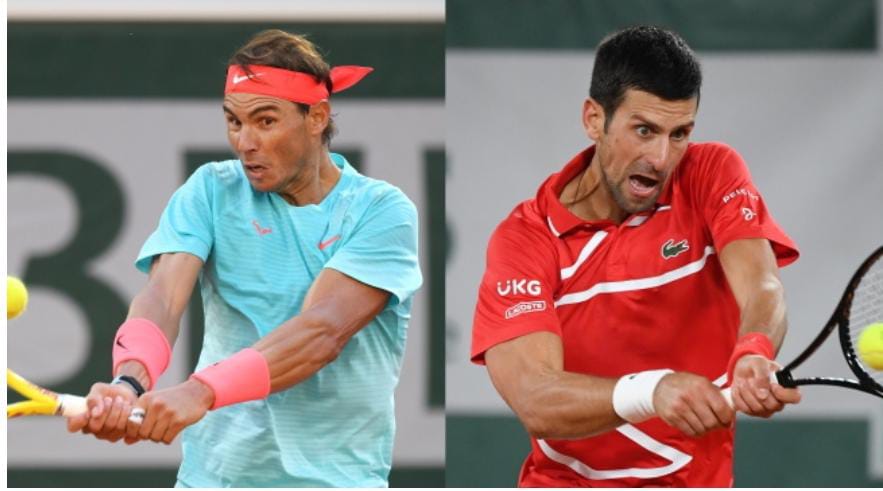
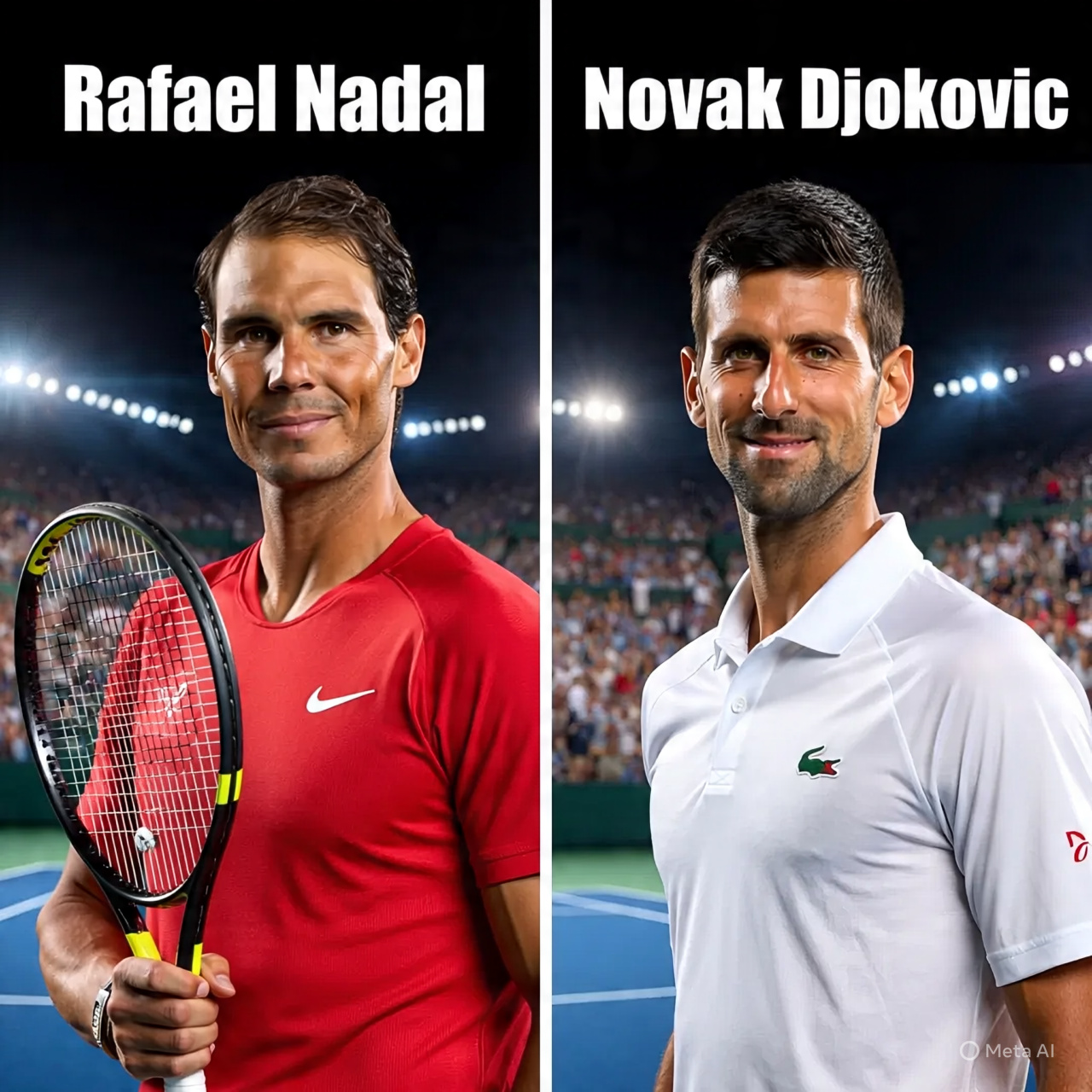
Rafael Nadal vs. Novak Djokovic – The rivalry between Rafael Nadal and Novak Djokovic transcends tennis. It is a 20-year clash of philosophies, bodies, and wills that has sculpted the history of the sport. As we enter 2026, with Nadal likely in his final act and Djokovic defying time, their legacies are both complete and yet still in flux. This comparison is not merely a tally of trophies, but an analysis of two contrasting paths to immortality—one forged in the fire of natural force, the other in the ice of relentless perfection.
Chapter 1: Career Arcs – The Phoenix and The Terminator
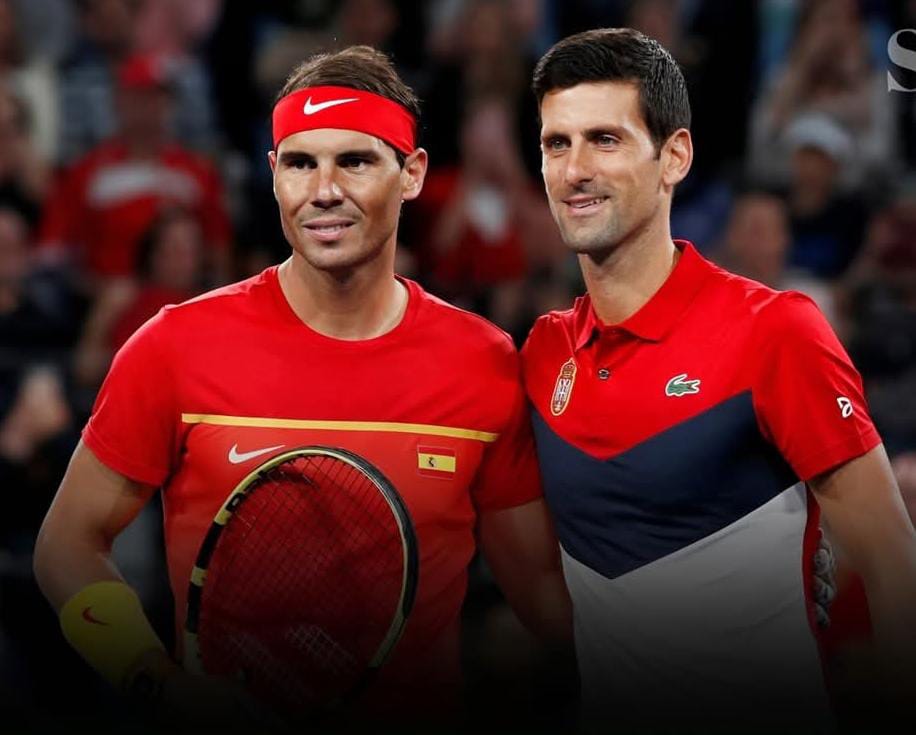
Rafael Nadal: The Conqueror of Clay and Adversity
Nadal’s career is a testament to willpower overcoming physical fragility.
- The Teenage Tsunami (2005-2008): Exploded by winning the French Open on debut at 19, dethroning the clay king. Established an unprecedented dominance at Roland Garros while rapidly developing a formidable all-court game, culminating in his epic 2008 Wimbledon victory over Federer.
- The Resilient King (2009-2019): This era was defined by a brutal, physical style that came at a cost. Chronic knee tendonitis (patellar tendinopathy) and a series of foot issues (Müller-Weiss syndrome) required constant management. Yet, he adapted—shortening points, improving his serve, and maintaining an almost spiritual hold on clay. His 2013 comeback from a 7-month injury layoff to win 10 titles, including the US and French Opens, is one of sport’s great resilience stories.
- The Indian Summer & Final Farewell (2020-2025): Against all odds, Nadal found a late-career peak. His 2022 season, winning the Australian Open (coming back from two sets down in the final) and a 14th French Open with a pain-killing injection in his foot, defied medical logic. By early 2026, after a 2024 farewell tour overshadowed by persistent injuries, his career is celebrated as a triumph of spirit over the limits of the human body.
Novak Djokovic: The Evolution into the Ultimate Machine
Djokovic’s journey is one of self-optimization, transforming from a talented but fragile contender into an impenetrable champion.
- The Challenger (2007-2010): Broke the Federer-Nadal duopoly by winning the 2008 Australian Open. Struggled with fitness and respiratory issues, famously retiring from multiple Grand Slam matches.
- The Ascendant Perfectionist (2011-2020): His 2011 season (41-match win streak, 3 Slams) announced a new paradigm. Through a gluten-free diet and a supreme focus on flexibility and recovery, he solved his physical issues. He developed the most complete, resilient game in history: impregnable defense, elastic movement, and clutch serving. He mastered all surfaces, beginning his reign over the Australian Open and seizing the World No. 1 record.
- The Historic Champion & Lone Wolf (2021-2026): This phase is defined by his pursuit of records amid external turbulence. Despite missing major tournaments due to his COVID-19 vaccination stance, he focused ruthlessly on Grand Slams. His mental fortitude became legendary, saving championship points to win major finals. By early 2026, as the oldest-ever World No. 1, he stands alone atop every major statistical category, his longevity a product of his scientifically-optimized approach.
Chapter 2: The Statistical Summit (Through Early 2026)
| Category | Rafael Nadal | Novak Djokovic |
|---|---|---|
| Grand Slam Titles | 22 | 27 |
| Weeks at World No. 1 | 209 | 450+ |
| Year-End No. 1 Finishes | 5 | 9 |
| ATP Masters 1000 Titles | 36 | 43 |
| ATP Tour Titles | 92 | 110+ |
| Career Win-Loss % | ~83.3% | ~83.5% |
| Head-to-Head | 29 | 33 |
| Grand Slam H2H | 11 | 11 (Tied) |
| Key Surface Dominance | French Open: 14 Titles (112-3 record) | Australian Open: 11 Titles, ATP Finals: 7 Titles |
The Grand Slam Distribution:
- Nadal: A surface specialist who became an all-court legend. French Open (14), Australian Open (2), Wimbledon (2), US Open (4). His “Double Career Slam” (winning each major at least twice) is a unique feat of versatility.
- Djokovic: The master of均衡. Australian Open (11), French Open (3), Wimbledon (8), US Open (5). His Triple Career Slam (winning each major at least three times) underscores his all-surface supremacy and consistency.
Head-to-Head Nuance: Djokovic leads overall, but Nadal dominates on clay (20-8), while Djokovic leads decisively on hard courts (22-8). Their epic 2012 Australian Open final (5h53m) and 2021 French Open semifinal (a Nadal defeat on his citadel) are epoch-defining matches.
Chapter 3: Playing Style & Tennis Philosophy
- Rafael Nadal: The Physical Poet. Nadal’s game is a force of nature shaped by his uncle Toni’s philosophy: relentless intensity and heavy topspin as weapons. His violent, lasso-whip forehand, especially his inside-out strike, is the most destructive single shot in tennis history. His defensive skills—retrieving impossible balls—were rooted in preternatural speed and grit. His style was high-risk to his body but created a psychological aura of inevitability, especially on clay.
- Novak Djokovic: The Clinical Surgeon. Djokovic embodies modern, optimized tennis. His game is built on flexibility, balance, and efficiency. His double-jointed elasticity allows him to slide and stretch into defensive positions no other player can reach, transforming defense into offense instantly. His backhand down-the-line is the most reliable pressure shot in the sport. His serve, once a weakness, became a pinpoint weapon. His style is low-waste, designed to break opponents mentally and physically with minimal self-damage.
Chapter 4: Intangibles & Legacy Dimensions
The Mental Battle:
- Nadal’s Intangible: Vamos!—The unquantifiable fighting spirit. His ability to elevate his level in the most crucial points, his ritualistic intensity, and his profound respect for the contest created an aura of invincibility in best-of-five-set matches.
- Djokovic’s Intangible: The Ice Man. His capacity for mental detachment under extreme pressure is unparalleled. Facing championship points against Federer (Wimbledon 2019) or hostile crowds, he enters a state of focused calm, treating pressure as a privilege. His mindfulness approach is his secret weapon.
Impact Beyond Titles:
- Nadal’s Legacy: The warrior-king. He represents honor, passion, and the triumph of human spirit over limitation. His academy and charitable work extend his influence. He is the people’s champion, whose effort is universally admired.
- Djokovic’s Legacy: The ultimate competitor. He represents the frontier of self-belief, preparation, and holistic excellence. His formation of the PTPA (Professional Tennis Players Association) highlights his role as a reformer. He is the champion’s champion, respected for his mastery but often casting a more complex, polarizing figure due to his unwavering individualism.
Chapter 5: The Early 2026 Verdict – Two Kinds of Greatness
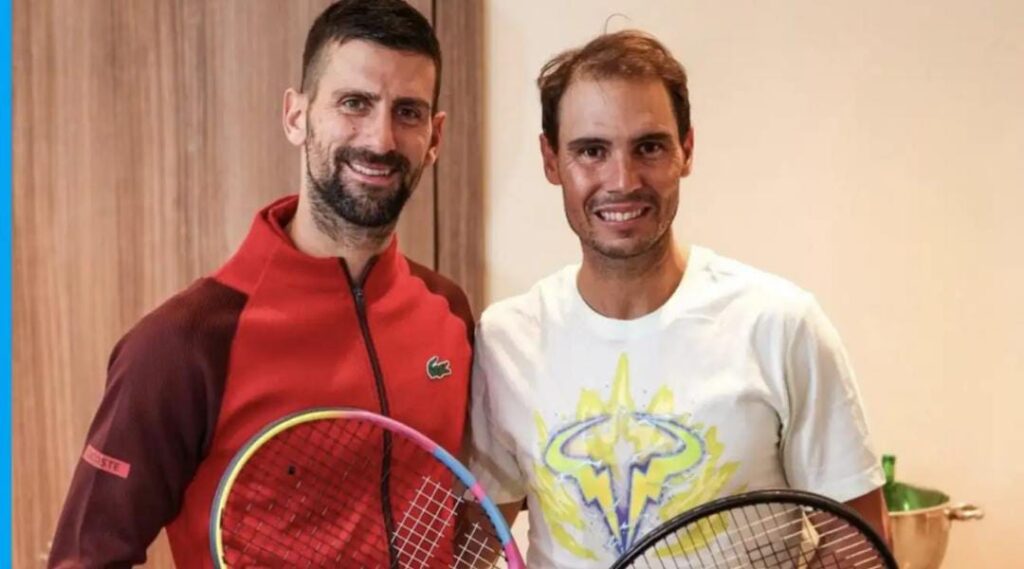
As of early 2026, the numerical argument is decisively settled in Novak Djokovic’s favor. He leads in:
- Grand Slam titles (27 to 22)
- Weeks at No. 1 (by a colossal margin)
- Masters 1000 titles
- Head-to-Head record
- The coveted “Double Golden Masters” (winning all 9 Masters events twice)
- Likely, a positive win-rate against both Nadal and Federer
He is, by the objective metrics of the sport, the Greatest of All Time.
However, to label this a pure victory is to misunderstand Nadal’s legacy and the essence of their rivalry.
Rafael Nadal carved his greatness from a more unforgiving stone. His career was a constant battle against a body that betrayed his will. That he reached 22 Slams, dominated a single tournament like no athlete ever has (Roland Garros), and became a beloved global icon of resilience, makes his achievement uniquely human and inspirational.
Conclusion: The Yin and Yang of Tennis
Their rivalry is the central dialectic of modern tennis:
- Nadal is Force. Djokovic is Precision.
- Nadal is Heart. Djokovic is Mind.
- Nadal is the Unconquerable Spirit. Djokovic is the Unbreakable System.
If tennis history is a mountain, Djokovic stands at the highest peak by the ruler’s measure. But Nadal’s peak, forged on the steepest, most arduous cliff face, shines with a light that many find just as bright, if not more compelling.
Djokovic may own the record book, but Nadal owns Roland Garros and a permanent place in the heart of the sport. Together, they form the greatest rivalry in tennis history, a 20-year conversation between two opposing, perfect answers to the same question: What does it mean to be the greatest? In early 2026, we have the privilege of knowing both.