Pakistan vs. India in Hockey – More Than a Game, A Rivalry Forged in History
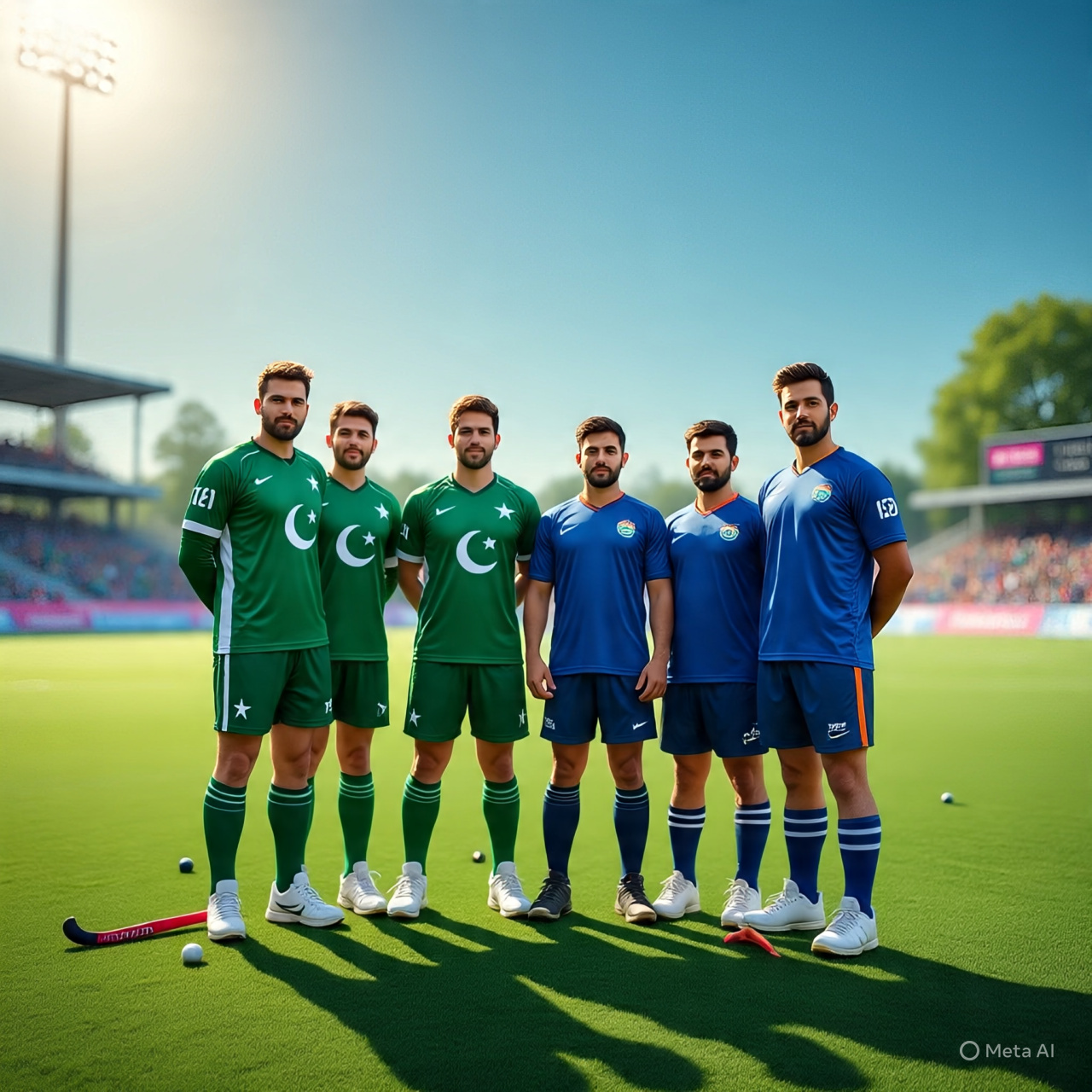
Pakistan vs. India in Hockey – The hockey rivalry between Pakistan and India is not merely a sporting contest; it is a geopolitical drama played out on an astroturf stage, a reflection of shared history and starkly divergent modern trajectories. By early 2026, as both nations navigate a new global hockey landscape, their historical comparison tells a tale of fallen giants, fleeting revivals, and an uncertain future. This essay explores the all-time arc of this unique sporting conflict, from its zenith as the definitive battle for world supremacy to its current status as a poignant fight for regional pride and global relevance.
Chapter 1: The Golden Eras – Defining Dynasties
India: The Pioneering Superpower (1928-1980)
India’s hockey story is one of foundational dominance. Under the guidance of legends like Major Dhyan Chand, India didn’t just win; they redefined the sport with an artistic, magical stick-work style.
- Olympic Hegemony: From their first Olympic gold in 1928 to their last in 1980, India won 8 Olympic gold medals, including six consecutive titles from 1928 to 1956—a record untouched in any team sport. Their 1975 World Cup victory in Kuala Lumpur, led by the brilliance of Ajit Pal Singh, marked the last hurrah of this classical era.
- The Style: Indian hockey was characterized by sublime individual skill, intricate passing, and a focus on open-play goals. It was hockey as an art form, perfectly suited to the natural grass surfaces of the time.
Pakistan: The Heir and the Challenger (1960-1994)
Pakistan emerged as the fiercest rival and worthy successor to India’s throne, blending sublime skill with a newfound physical rigor and tactical discipline.
- The Peak of Success: Pakistan’s golden era yielded 4 Olympic golds (1960, 1968, 1984, 1992) and a then-record 4 Hockey World Cup titles (1971, 1978, 1982, 1994). Their 1994 World Cup victory in Sydney, featuring stars like Shahbaz Ahmed Sr., stands as the nation’s last global triumph.
- The Style & Mentality: Pakistani hockey was electrifying—featuring breathtaking speed, powerful dribbling (epitomized by the “drag-flick” pioneer Sohail Abbas, though later), and a lethal counter-attacking prowess. They matched Indian skill but added an aggressive, competitive edge that often tipped major finals in their favor during this period.
Chapter 2: The Statistical Ledger (Until Early 2026)
| Category | Pakistan | India |
|---|---|---|
| Olympic Gold Medals | 4 | 8 |
| Olympic Medals (Total) | 8 (4G, 3S, 1B) | 12 (8G, 1S, 3B) |
| FIH World Cup Titles | 4 (1971, 1978, 1982, 1994) | 2 (1975, 2023) |
| FIH World Cup Medals | 7 (4G, 2S, 1B) | 5 (2G, 2S, 1B) |
| Champions Trophy Titles | 3 (1978, 1980, 1994) | 1 (2016 – shared) |
| Asian Games Gold | 8 | 3 |
| Asia Cup Titles | 3 | 3 |
| Head-to-Head (Official FIH) | ~82 Wins (as of early 2026) | ~64 Wins |
| Key Differentiator | Dominated the World Cup in the 70s-90s. | Unmatched Olympic legacy; won the first modern World Cup (2023). |
Head-to-Head Analysis: Pakistan holds a significant historical advantage in direct clashes, particularly during their 70s-90s peak. However, since 2010, the tide has turned decisively. India has dominated recent encounters at the Asian Games, Asia Cup, and World Cups, reflecting the stark divergence in their modern development pathways.
Chapter 3: The Great Decline and Divergent Rebirths
The Common Fall (Late 1990s – Early 2010s):
Both nations suffered a catastrophic decline due to shared and unique factors:
- Global Shift: The 1990s move to synthetic astroturf and rule changes (offside abolition, roll-in substitutions) demanded supreme fitness, power, and structured play. This marginalized the subcontinent’s skill-based, improvisational style.
- Systemic Collapse: Chronic administrative mismanagement, political interference, lack of scientific training, and the growing financial lure of cricket for young athletes crippled the grassroots systems in both countries.
The Divergent Paths to Revival:
India: The Systemic, Funded Resurgence (2012-Present)
India’s revival has been engineered through institutional investment and planning.
- Professional Structures: The founding of the Hockey India League (2013-2017) was transformative, exposing Indian players to world stars and modern tactics. The current domestic structure is more robust.
- Investment & Science: Significant corporate sponsorship (Odisha state government), centralized contracts, and investment in sports science, analytics, and foreign coaching (from Roelant Oltmans to Graham Reid) modernized the game.
- The Pinnacle: This culminated in a historic Bronze at the 2020 Tokyo Olympics (first in 41 years) and a sensational FIH World Cup Bronze in 2023.
- Early 2026 Status: India is a consistent top-5 ranked team, featuring world-class talents like Harmanpreet Singh and Hardik Singh. The system, while imperfect, produces results.
Pakistan: The Spiraling Crisis and False Dawns (2010-Present)
Pakistan’s story is one of unmitigated decline, punctuated by fleeting moments of hope.
- Administrative Chaos: The Pakistan Hockey Federation (PHF) has been plagued by perpetual infighting, financial insolvency, and a complete breakdown of the domestic structure. The national league is defunct.
- International Isolation: Frequent failures to qualify for major events (missing the 2014 World Cup, 2016 & 2020 Olympics, 2022 World Cup) created a vicious cycle of lost exposure and funding.
- Talent Exodus: With no domestic career path, talented players seek club contracts in Europe, often severing ties with the chaotic national system.
- Early 2026 Status: Ranked outside the world’s top 15, Pakistan hockey is in an existential crisis. Participation in the 2026 World Cup is uncertain. The team relies on individual flashes of inherited skill, devoid of systemic support, fitness, or modern tactical coherence.
Chapter 4: Playing Styles and Cultural Identity
- India’s Evolution: They have successfully hybridized their DNA. The classic dribbling artistry of a Dhanraj Pillay has evolved into the structured, powerful modern game. They retain exceptional close-quarter skills but now combine it with world-class drag-flicking, structured pressing, and athleticism. The flair is now a weapon within a system.
- Pakistan’s Stagnation: Pakistani style remains, in spirit, a ghost of its former self—reliant on individual brilliance, sudden bursts of speed, and instinct. However, without the fitness base, tactical discipline, or consistent high-level competition, this style now appears chaotic and outdated against modern teams. The once-feared “green shirt” aura has faded.
Chapter 5: Legacy and the Early 2026 Crossroads
The Historical Verdict:
- In the 20th Century, this was the greatest rivalry in world hockey. Pakistan arguably held the edge from the 1960s through the 1990s, with more World Cups and a winning head-to-head record against India during their shared peak.
- India’s 8 Olympic golds, however, represent a foundational legacy of dominance that Pakistan cannot match. India’s recent renaissance and 2023 World Cup medal have solidified their claim as the more successful nation when the full historical sweep is considered.
The Stark 2026 Reality:
As of early 2026, this is no longer a rivalry of equals. It is a comparison between a program and a parable.
- India is a professional sports entity, focused on the future, competing with Belgium, Germany, and Australia.
- Pakistan is a cautionary tale, a stark reminder of how administrative neglect can destroy a world-conquering sport. The rivalry now exists only in memory and in emotionally charged but increasingly rare Asian fixtures.
Conclusion: A Mirror to Nations
The all-time comparison of Indian and Pakistani hockey is a narrative in two acts.
Act I: The Duel of Giants (1928-1994). A glorious, seesawing battle for global supremacy where skill and passion defined the sport. Pakistan’s modern-era World Cup prowess slightly edges India’s later Olympic record in this period, but India’s eight golds provide an unmatched foundation.
Act II: The Great Divergence (1995-2026). A story of two responses to change. India adapted, however painfully slowly, and is now re-established. Pakistan failed to adapt and has faced near-total collapse. India’s 2023 World Cup medal and consistent top-tier status, contrasted with Pakistan’s absence from the world stage, decisively tips the overall historical balance in India’s favor as of early 2026.
The legacy is bittersweet. Together, they gave hockey some of its most iconic moments. Today, their comparison is less about who was greater, and more a powerful lesson in how sports systems—their care or their corruption—ultimately write the final scoreline of history. For the rivalry to be reborn, Pakistan must not just beat India on the field; it must first replicate India’s off-field revival. Until then, the greatest clash in hockey history remains a cherished, but increasingly distant, memory.