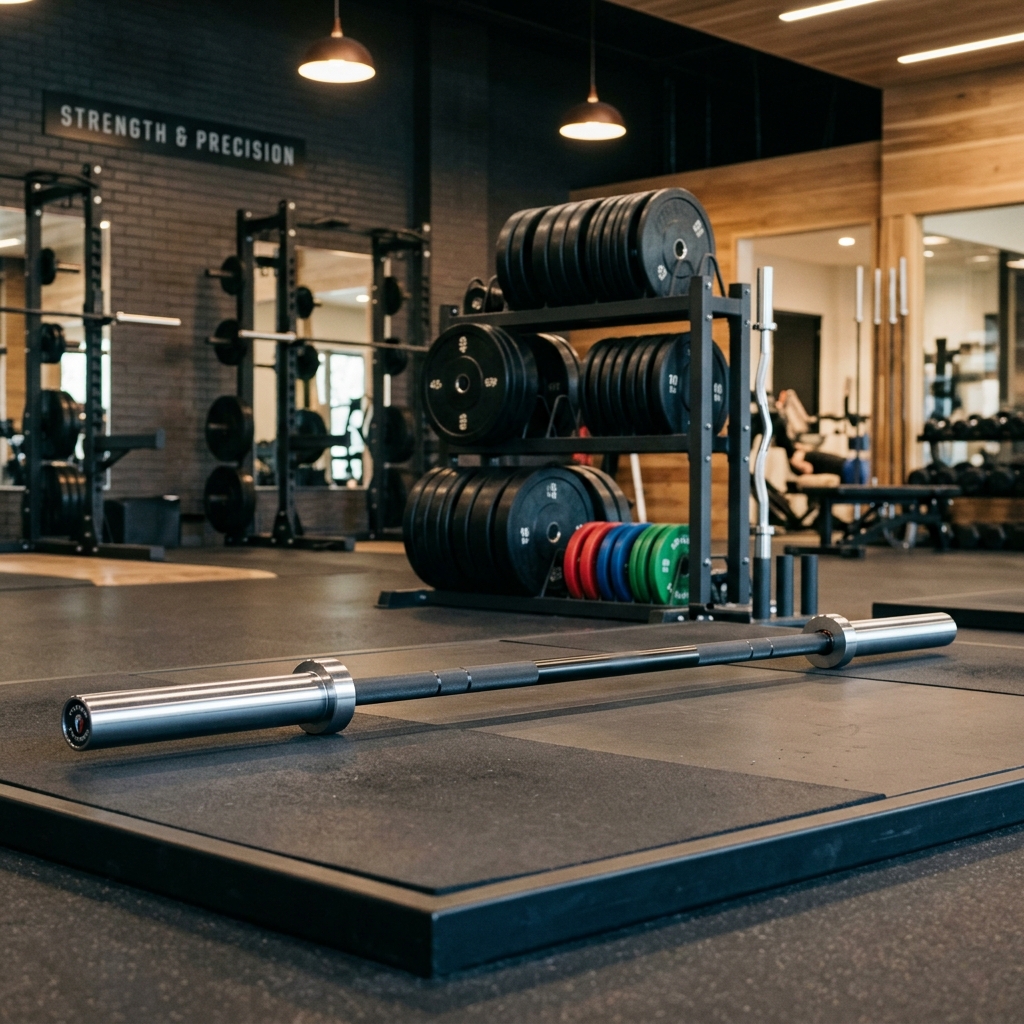
Have you ever walked into a gym, looked at the racks of equipment, and wondered which bar is the right one for you? I remember staring at a sea of steel during my first week of lifting, completely overwhelmed! It turns out, that long, heavy metal bar you see everywhere is actually an amazing piece of engineering known as the Olympic barbell.
So, what makes an Olympic barbell “Olympic”? Originally designed for the dynamic, heavy lifts seen in the Olympic Games, these barbells are built to withstand massive amounts of weight while providing a slight “whip” (or bend) to help lifters complete complex movements. They have evolved from stiff, heavy iron poles of the early 1900s into highly specialized tools featuring rotating sleeves and perfectly calibrated dimensions.
If you want to build serious strength, choosing the right bar is absolutely crucial. Let’s dive right into everything you need to know about Olympic barbells!
Benefits of Training with Olympic Barbells
Picking up an Olympic barbell is one of the best decisions you can make for your fitness journey! Here is why they are so fantastic for your workouts.
Enhanced Strength and Muscle Growth
Lifting heavy weights with a barbell engages multiple muscle groups at once. Whether you are squatting or pressing, you are recruiting your core, legs, and back simultaneously. This compound movement leads to incredible strength gains and massive muscle growth!
Improved Technique and Form
Because Olympic barbells are standardized, they allow you to master your technique. The rotating sleeves on the ends of the bar reduce the torque on your wrists and elbows, making explosive movements much smoother and safer.
Versatility in Exercises
You can do almost anything with one of these bars! From heavy deadlifts and back squats to overhead presses and power cleans, a single Olympic barbell can give you a full-body workout. It is the ultimate versatile tool for any home gym.
Key Features of a Quality Olympic Barbell
When you start shopping, you will notice a lot of technical terms. Don’t worry, I am going to break them down so you know exactly what to look for!
Material and Finish
The finish of your bar determines how well it resists rust and how the grip feels. Bare steel gives the best grip but requires a lot of maintenance to prevent rust. Chrome and zinc offer great protection and look super sleek! If you want something truly durable and colorful, cerakote is an amazing ceramic coating that I highly recommend for humid environments.
Tensile Strength and Yield Strength
Tensile strength tells you how much weight the bar can hold before it breaks, usually measured in PSI (pounds per square inch). A good quality bar should have at least 165,000 PSI, though premium bars push 190,000 PSI or more! Yield strength refers to how much weight it takes to permanently bend the bar.
Knurling
Knurling is the crosshatch pattern carved into the metal to help you grip the bar. Some bars have an aggressive, deep knurl that acts like sandpaper—perfect for heavy deadlifts so the bar won’t slip! Other bars have a softer knurl, which is much better for high-rep workouts where you don’t want to tear your hands.
Spin: Bushings vs. Bearings
The sleeves of the bar need to spin. Bushings are solid rings (usually brass or bronze) placed between the shaft and the sleeve, providing a smooth, reliable spin ideal for powerlifting. Bearings use small needles or balls to provide a fast, incredibly smooth spin, making them perfect for fast Olympic lifts like the snatch!
Diameter and Weight Specifications
A standard men’s Olympic bar weighs exactly 20 kilograms (44 pounds) and usually has a shaft diameter of 28mm to 29mm. A standard women’s bar weighs 15 kilograms (33 pounds) and features a slightly thinner 25mm shaft, making it easier to grip for smaller hands.
You might also like, Zuyomernon System Basketball
Types of Olympic Barbells
Not all bars are created equal! Depending on how you like to train, you might prefer a specific style.
Powerlifting Bars
These bars are built to be stiff! If you are squatting or deadlifting massive amounts of weight, you don’t want the bar bouncing around on your back. They usually feature aggressive knurling and a thicker 29mm shaft.
Weightlifting Bars
Designed specifically for the Olympic lifts (the snatch and the clean and jerk), these bars have plenty of “whip” to help you bounce out of the bottom of a heavy lift. They almost always use bearings for a fast spin to protect your wrists.
Specialty Bars
Sometimes you need to mix things up! Deadlift bars are longer and thinner to provide maximum flex before the weights leave the floor. Squat bars are incredibly thick and heavily knurled across the entire center to grip your back tightly.
Choosing the Right Barbell for You
With so many options, how do you pick? Start by thinking about your training goals! If you love heavy, slow lifts, a powerlifting bar is your best friend. If you do a mix of everything, including CrossFit-style workouts, a standard “multi-purpose” bar with a medium knurl and bushings is a fantastic choice!
Budget is also important. While it might be tempting to buy the cheapest bar available, a well-made barbell is an investment that can last a lifetime. Look for a bar with a solid warranty to protect your purchase.
Maintenance and Care for Your Barbell
Taking care of your barbell is surprisingly easy, but you have to be consistent!
Cleaning and Rust Prevention
Chalk and sweat are your barbell’s worst enemies. Grab a nylon bristle brush and scrub the knurling after your workouts to remove leftover chalk. Once a month, wipe the bar down with a light coat of 3-in-1 oil to keep rust completely at bay!
Proper Storage
Always unload your weights when you are done lifting! Leaving heavy plates on the bar while it sits in the rack can cause it to permanently bend over time. Store it horizontally on a rack or vertically in a proper bar holder.
Common Mistakes to Avoid
I have seen plenty of ruined equipment over the years, and it usually comes down to a few simple errors!
First, do not drop an empty barbell on the ground! Without rubber bumper plates to absorb the shock, dropping an empty bar will shatter the bearings and damage the sleeves.
Second, skipping your cleaning routine will leave your bar looking rusty and feeling terrible in your hands. Finally, make sure you use the right bar for the right exercise. Using a highly flexible weightlifting bar for a heavy back squat can be incredibly unstable and dangerous!
Ready to Crush Your Fitness Goals?
An Olympic barbell is truly the centerpiece of any great strength training program. From building massive muscle to perfecting your athletic technique, the benefits are absolutely unmatched! By understanding the different materials, knurling types, and spin mechanisms, you can easily find the perfect piece of equipment for your home gym.
Remember to match your bar to your training style, maintain it regularly with a good brush and oil, and never drop it empty!
Are you excited to start lifting and feeling stronger than ever? Check out our amazing selection of Olympic barbells to find the perfect fit for your next workout!