
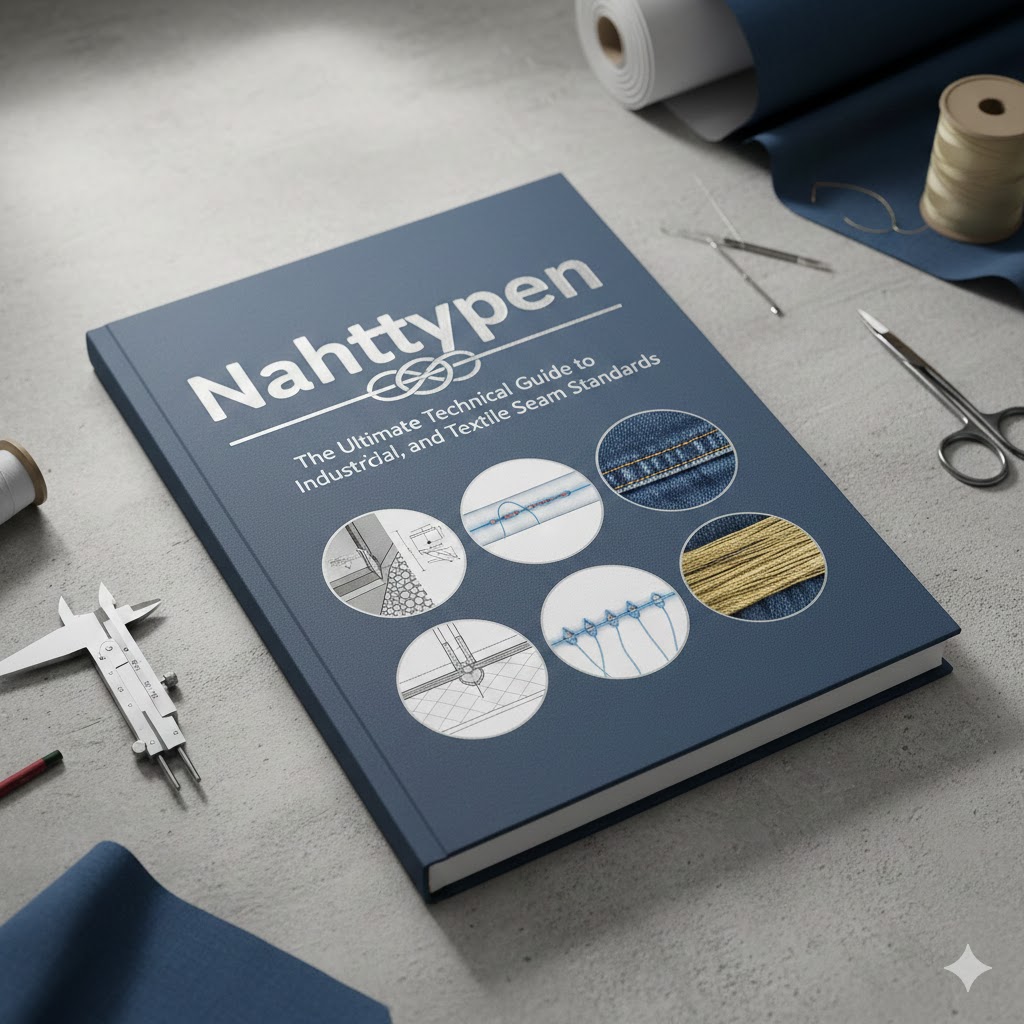
Nahttypen
Nahttypen – In the sophisticated world of manufacturing and engineering, the term Nahttypen refers to the fundamental architecture of material joining. Whether in high-performance sportswear, aerospace textiles, heavy-duty leatherwork, or life-saving surgery, the choice of a specific seam type is a critical engineering decision that determines the structural integrity, durability, and functionality of the final product.
Global industry relies on the standardization provided by ISO 4915 (for stitch types) and ISO 4916 (for seam types) to facilitate precise communication between designers, material scientists, and production facilities. This article provides an expert-level analysis of various Nahttypen, their mechanical properties, and their specialized applications across diverse industries.
You Might Also Like: VIPRow Sports
The Architecture of a Seam: Stitches vs. Seams
To understand Nahttypen at a professional level, one must distinguish between the stitch (the microstructure) and the seam (the macrostructure).
- The Stitch (ISO 4915): This is the basic unit of conformation resulting from one or more strands of thread intralooping, interlooping, or interlacing.
- The Seam (ISO 4916): This describes the spatial arrangement of the fabric layers and the configuration of the material relative to the stitching line.
The synergy between these two components determines “seam efficiency”—the ratio of the strength of the seam to the strength of the unsewn fabric.
1. Systematic Classification of Stitch Types (ISO 4915)
ISO 4915 categorizes stitches into six primary classes, each offering unique mechanical advantages.
Class 100 – Single-Thread Chainstitches
These Nahttypen are formed using a single needle thread. They are characterized by “intralooping,” where a thread loop is secured by the subsequent loop of the same thread on the underside of the material.
- 101 (Basting Stitch): Often used for temporary fixation or bag closing; it is easily removable by pulling the thread end.
- 103 (Single-Thread Blindstitch): The needle only partially penetrates the lower layer, making the stitch invisible from the outside—ideal for high-end tailoring hems.
Class 300 – Lockstitches (The Industrial Standard)
Class 300 stitches involve two thread systems: a needle thread and a bobbin thread. They are “interlaced,” meaning the two threads cross each other in the center of the material layers.
- 301 (Plain Lockstitch): This is the most common of all Nahttypen. It looks identical on both sides and offers maximum stability and security against unraveling.
- 304 (Zigzag Lockstitch): Its geometric arrangement allows for significant elasticity, making it essential for corsetry and stretch inserts.
Class 400 & 600 – Chainstitches for Performance and Stretch
- 401 (Double Chainstitch): Highly durable and flexible, this is the signature stitch for the heavy-duty seams found in denim and workwear.
- 607 (Flatlock): A complex Nahttypen using four needles and six threads to join fabric edges “butt-to-butt.” It produces a flat, zero-bulk seam essential for athletic apparel and seamless-style garments.
2. Geometry of Seam Constructions (ISO 4916)
While stitch types define the thread path, ISO 4916 classifies the macroscopic arrangement of material parts into eight classes.
| Seam Class | Technical Designation | Typical Application |
| Class 1 | Superimposed Seams | Standard side seams, shoulder seams |
| Class 2 | Lapped Seams | Denim inseams (Flat-felled seam) |
| Class 3 | Bound Seams | Neckline finishes, edge reinforcements |
| Class 4 | Flat Seams | Underwear, wetsuits (Butt-to-butt joins) |
Comparison: French Seam vs. Flat-Fell Seam
Two of the most discussed Nahttypen in technical design are the French Seam and the Flat-Fell Seam, each representing different priorities:
- French Seam (Class 1 – SSae): Known as a “seam within a seam,” it completely encloses the raw fabric edges. It is the gold standard for lightweight, translucent fabrics like silk and chiffon, where an overlock would be aesthetically unacceptable.
- Flat-Fell Seam (Class 2 – LSc): This is the most robust of the overlapping Nahttypen. The edges are folded into each other and double-topstitched, creating a four-layer construction that is nearly impossible to tear. It is indispensable for heavy-duty garments like jeans.
3. Medical Nahttypen: Surgical Suture Techniques
In surgery, Nahttypen are referred to as sutures and are selected based on the biomechanical requirements of the tissue being repaired.
Material Science of Suture Threads
- Absorbable Sutures: Materials like Vicryl (Polyglactin 910) or PDS are degraded by the body via hydrolysis. They are used for deep internal tissues where manual removal is impossible.
- Non-Absorbable Sutures: Materials like Nylon (Ethilon) or Prolene remain permanently or are removed after the skin has healed. They offer long-term tensile strength for fascia or vascular repairs.
Essential Surgical Stitch Forms
- Simple Interrupted Suture: Each stitch is independent, offering a secure point-by-point adaptation. If one stitch fails, the remaining ones continue to hold the wound.
- Donati Suture (Vertical Mattress): A vertical Rückstichnaht designed for high-tension areas. It allows for perfect adaptation of the wound edges and promotes “eversion” (the slight outward rolling of the skin edges) for cleaner healing.
- Intracutaneous Suture: This suture runs entirely within the dermis (the lower layer of skin), leaving no external stitch scars. It is the preferred method for cosmetic surgery.
4. Specialized Industrial Nahttypen: Leather and Technical Materials
Joining non-textile materials requires specialized equipment and unique Nahttypen to handle the physical resistance of the medium.
Leathercraft: The Saddle Stitch (Sattelnaht)
The “Königsdisziplin” (king of disciplines) in leatherwork is the manual Saddle Stitch. Using two needles and a single thread, the threads cross within each diamond-shaped hole. If one thread breaks, the other still holds the layers together, making it vastly superior to machine stitching for luxury leather goods.
Welding Positions (DIN EN ISO 6947)
In heavy industrial engineering, Nahttypen also include welding seams. The position of the weld is critical:
- PA (Flat Position): Horizontal welding of butt and fillet seams; gravity helps the melt flow into the root.
- PF (Vertical Up): Vertical welding from bottom to top, providing the highest static load capacity for structural steel.
Ultrasonic Welding (Fadenlose Nahttypen)
In medical production (e.g., surgical masks and sterile equipment), ultrasonic welding replaces traditional threads. High-frequency vibrations (20–40 kHz) generate localized frictional heat, melting thermoplastic fibers to create a seamless, airtight, and watertight bond. Advantages: No needle perforations, zero contamination, and extreme production speeds (up to 300ms per weld).
5. Troubleshooting: Common Seam Failures and Solutions
Mastering Nahttypen requires an understanding of why seams fail. Professionals look for three primary indicators:
- Puckering: The unwanted wrinkling of the fabric along the seam line. This is often caused by excessive thread tension or “flagging”—where the fabric lifts with the needle.
- Skipped Stitches: Occurs when the hook or looper misses the needle thread loop. Solution: Adjust needle timing or swap to a needle with a deeper “scarf” (Hohlkehle).
- Thread Breakage: Often a result of heat accumulation. In high-speed industrial sewing, needles can reach 200°C, melting synthetic threads. Using Teflon-coated needles or MCT (Micro Core Technology) threads can mitigate this.
Conclusion
The science of Nahttypen is a convergence of geometry, material science, and mechanical precision. From the microscopic interlacing of a Class 301 lockstitch to the complex tensile requirements of a surgical Donati suture, these joining techniques are the silent foundation of our modern infrastructure. Understanding the nuances of ISO 4915 and 4916 standards is not just a requirement for manufacturing; it is a prerequisite for ensuring the safety, performance, and longevity of the products we use every day.
Nahttypen FAQ: 15 Frequently Asked Questions
1. What is the difference between a stitch type and a seam type? A stitch type (ISO 4915) describes how the threads are interlaced or looped. A seam type (ISO 4916) describes how the fabric layers are arranged and where the stitches are placed in relation to those layers.
2. Which Nahttypen are best for elastic fabrics like spandex? Class 400 (Double Chainstitch) or Class 600 (Coverstitch/Flatlock) are ideal because their geometric thread arrangement allows the seam to stretch with the fabric without snapping.
3. Why do jeans use the Flat-Fell seam? The Flat-Fell seam is a Class 2 lapped seam that encloses all raw edges and uses four layers of fabric. This makes it exceptionally strong and resistant to the high friction and tension typical for denim.
4. When should I use a French Seam? French seams should be used for very fine, translucent, or fraying fabrics (like silk or chiffon). They provide a clean, professional finish inside the garment without needing an overlock machine.
5. What is the “Saddle Stitch” in leatherworking? The Saddle Stitch is a manual technique using two needles. It is the most durable of all leather Nahttypen because the threads cross inside the hole, preventing the seam from unraveling if one thread is cut.
6. Is a lockstitch (301) better than a chainstitch (401)? Not necessarily. A lockstitch is more secure against unraveling but is limited by bobbin capacity. A chainstitch is more elastic and efficient for mass production due to continuous thread supply.
7. What is “MCT” thread technology? Micro Core Technology (MCT) involves a high-strength polyester filament core wrapped in a fiber coating. It combines the strength of continuous filaments with the smoothness of spun yarns, perfect for high-speed industrial Nahttypen.
8. What are “absorbable” sutures in medical Nahttypen? Absorbable sutures are made of materials like Vicryl that the body breaks down over time. They are used for internal surgeries so that the patient does not require a second procedure to remove stitches.
9. What is a Donati suture? A Donati suture is a vertical mattress suture used in surgery. It is designed to bridge high-tension wounds while perfectly adapting the skin edges for minimal scarring.
10. How does needle size affect Nahttypen? The needle diameter (Metric Number Nm) must match the thread and fabric. If the needle is too thick, it can cause displacement puckering; if it’s too thin, it may bend and cause skipped stitches.
11. What are the advantages of Ultrasonic Welding? Ultrasonic welding is thread-free, meaning the seams are 100% airtight and watertight. It is also extremely hygienic, making it the standard for medical PPE production.
12. What causes “Puckering” in a seam? Puckering is often caused by excessive thread tension, differential feeding of the fabric layers, or structural jamming when the needle is too thick for a dense weave.
13. What is a “Safety Stitch” (516)? A safety stitch is a combination of a 401 chainstitch (for strength) and a 504 overlock (for edge finishing), created simultaneously in a single pass.
14. Why is the label position important on a wood bat? (Semantic check) While unrelated to textile Nahttypen, in wood bat technology, the label is placed on the “weak side” of the grain. To avoid fracture, you should hit with the label facing up or down.
15. Can these standards be used together? Yes. In industrial QC, manufacturers often combine the ASCS (ABC Seams Code System) for general seam description with the specific ISO 4915 stitch code for absolute technical clarity.
For more updates, please visit newstimesports.com