
Flag Football Plays – Mastering the Playbook
Flag Football Plays – Choosing the right flag football plays is the single most important decision you can make on game day. A great playbook turns a group of individuals into a cohesive team, creating opportunities for every player to succeed. Whether you’re coaching 5-year-olds in their first-ever game or leading an experienced adult 8v8 league, understanding how to build and call plays is the key to unlocking your team’s full potential.
This ultimate guide provides everything you need. We will break down the core strategies for every popular format, provide simple, unstoppable play concepts, and give you actionable tools to build your own championship playbook.
Part 1: The Foundation: Building Blocks of Every Play
Before diving into specific plays, you must understand the two core components: Formations and Routes.
Essential Flag Football Formations
A formation is how your players line up at the start of a play. The right formation creates mismatches and confusion for the defense.
The Route Tree: The Language of Offense
Every receiver runs a predetermined path, or route. Mastering a few basic routes is better than confusing players with many. Here are the core routes from the official NFL FLAG route tree:
- Hitch: Run 7 yards, turn quickly back to QB. A reliable, easy catch.
- Slant: Run a few yards, cut at a sharp 45-degree angle across the field.
- Out: Run 5-7 yards, cut 90 degrees toward the sideline.
- Corner: Run 7 yards, cut 45 degrees toward the sideline. Great for stopping the clock.
- Fly (Go): Run straight down the field as fast as possible.
- Post: Run 7 yards, cut 45 degrees toward the goalpost in the center of the field.
Part 2: The Right Plays for Every League Format
Flag Football Plays 5v5
This is the most common youth and recreational format. The offense consists of a quarterback, a center (who can run routes), and three receivers.
- Simple Play: Trips Right Cross. Stack three receivers to the right. Have the outside receiver run a fly, the middle run a corner, and the inside receiver run a slant across the middle. This “crossing” action is hard for defenders to follow.
- Unstoppable Play: Single Back Criss-Cross. With receivers left and right, have them run crossing slant routes at different depths. The center can release for a safety-valve pass. This creates two open receivers in the short middle.
Flag Football Plays 6v6 & 7v7
These formats add more players, allowing for more complex strategies and dedicated rushers or blockers.
- Core Strategy: Use NFL passing concepts adapted for flag football. Concepts like “Snag” and “Mesh” are perfect because they get the ball out of the quarterback’s hands quickly and are devastating against man coverage.
- 7v7 Power Play: The Mesh Concept. Two receivers run shallow crossing routes in opposite directions, “meshing” in the middle. This creates chaos for defenders in man-to-man coverage and almost always leaves one receiver wide open.
Flag Football Plays 8v8
With eight players, the game resembles traditional football more closely. Emphasize organization and clear roles.
- Key Tip: Use printable play sheets and quarterback wristbands to manage the complexity. Organize plays by situation (e.g., “1st & 10,” “Goal Line”) for quick decision-making.
- Winning Tactic: Incorporate a balanced run-and-pass game. While passing is dominant, a well-timed jet sweep or end-around keeps the defense honest and opens up deeper passes.
Part 3: Age-Appropriate Plays: From 5-Year-Olds to Youth Leagues
For young children, simplicity, fun, and safety are the only priorities.
- For 5 & 7-Year-Olds: Use one or two basic plays all season long. The “HB Dive” (a simple handoff) is perfect. It teaches the basics of a snap and handoff without the complexity of passing. Focus on spreading the defense by having other players run straight down the field to clear space.
- For Youth (Ages 8+): Introduce simple route combinations. The “Crossbuck” is a fantastic youth play: fake a handoff one way and either give the ball to a runner going the opposite direction or have the QB roll out to pass. Misdirection is very effective at this level.
Part 4: Building Your Championship Playbook
Step 1: Start Simple
Choose 2-3 formations and 4-5 routes. It’s better to perfect a few plays than to be mediocre at dozens. For young teams, this might be one formation and two plays.
Step 2: Design for Your Players
Build plays around your talent. Do you have a speedy player? Use fly routes. Have a reliable, sure-handed catcher? Use them on hitch or slant routes.
Step 3: Practice with Tools
- Use Free & Printable Resources: Websites like NFL FLAG and others offer free, downloadable playbooks and printable play sheets. Print these and use them in practice.
- Leverage Technology: Online football play designer tools allow you to easily draw, save, and print custom plays for your team.
Step 4: Communicate Clearly on Game Day
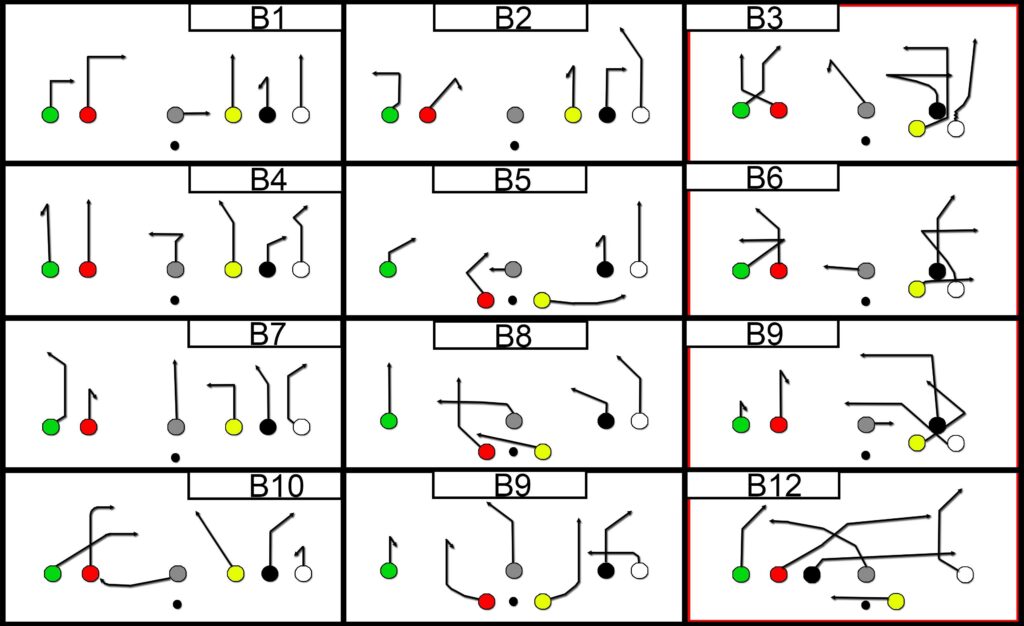
Eliminate huddle confusion by using a numbered play-calling system with wristbands. The QB calls a number, and every player checks their wristband to see the play and their route. This is a game-changer for teams of all ages.
Conclusion: From Learning to Dominating
The journey to a winning flag football season starts with a single, well-taught play. Remember that even the most “unstoppable flag football plays“ in the world are only as good as your team’s understanding and execution.
Start with the foundational routes, choose a simple formation that fits your league’s format, and focus on repetitive, fun practice. Use the wealth of free flag football plays and printable resources available to you. Most importantly, build confidence in your players. A team that knows what they’re doing and believes in the playbook is the most unstoppable force on any field. Now, get out there and start drawing up your first victory. For more information, please visit https://newstimesports.com/category/football/