Master the Court
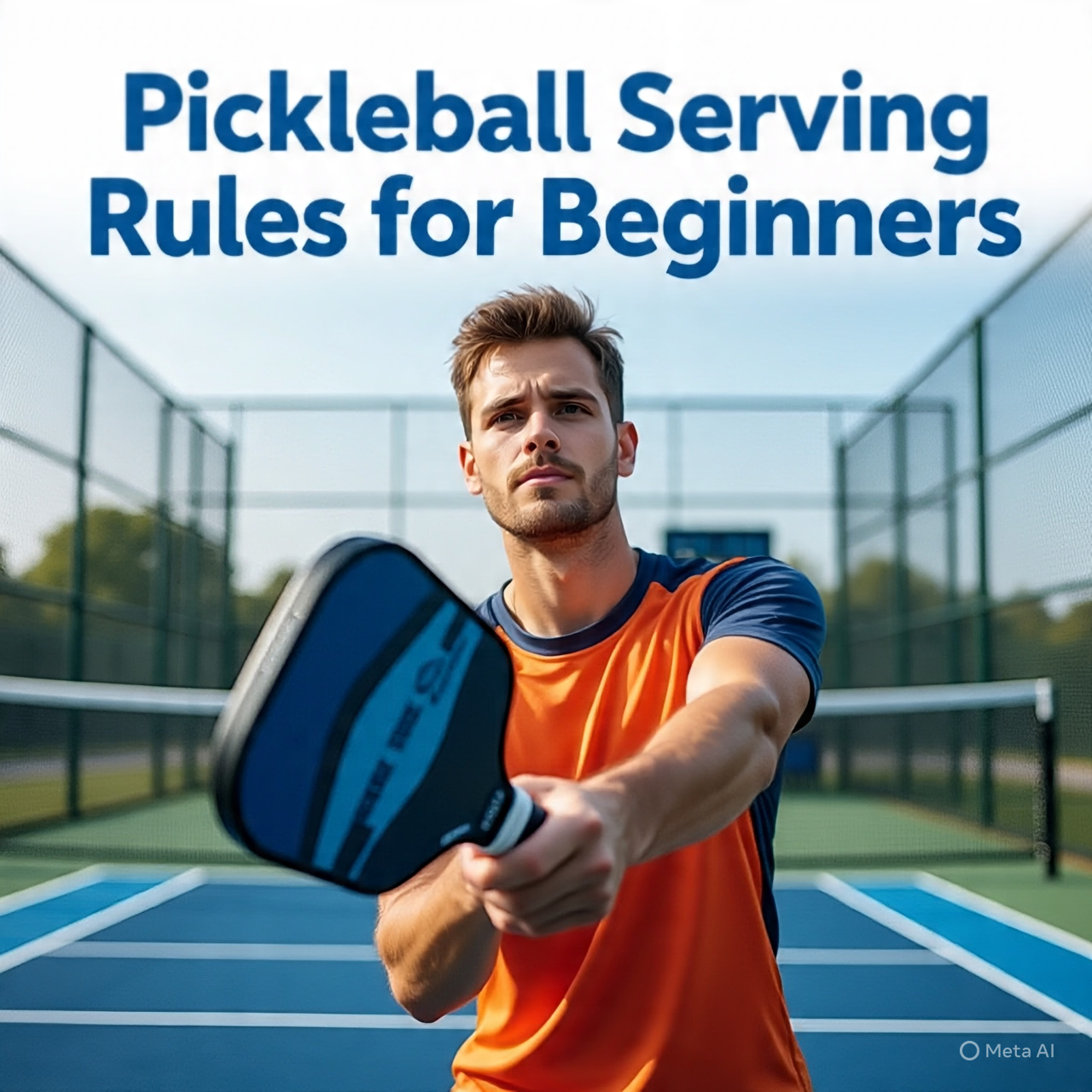
Master the Court – Pickleball is no longer just a trend; it is a global phenomenon. Whether you’re stepping onto a court in Florida, London, or Sydney, the first hurdle every player faces is the serve. Unlike tennis, where power is king, pickleball serving is about precision, legality, and strategic placement. In thisexhaustive guide, we’ll break down the “pickleball serving rules for beginners” to ensure you never commit a foot fault or lose a point on a technicality again.
1. The Core Philosophy of the Pickleball Serve
The primary goal of the serve in pickleball is to start the rally, not necessarily to hit an “ace.” Because of the unique rules—like the underhand requirement and the two-bounce rule—the serving team is actually at a slight disadvantage. Your job is to get the ball in deep and prepare for the return.
2. Mandatory Mechanics: Volley Serve vs. Drop Serve
As of 2026, players have two legal ways to serve. Choosing the right one can define your early success.
The Traditional Volley Serve
The volley serve is hit out of the air without the ball touching the ground. To be legal, it must meet three strict criteria:
- Upward Arc: Your arm must move in an upward arc at the time of contact.
- Underhand Motion: Contact must be made below the waist (navel level).
- Paddle Head Position: The highest point of the paddle head must be below the highest part of your wrist when you strike the ball.
The Modern Drop Serve
Introduced to simplify the game, the drop serve allows you to drop the ball from any height and hit it after it bounces.
- The “No-Force” Rule: You must simply let the ball fall. You cannot throw it down (propel it) or toss it up to gain extra bounce height.
- Relaxed Mechanics: Unlike the volley serve, the “below the waist” and “upward arc” rules do not apply once the ball has bounced. This makes it a favorite for beginners struggling with technical form.
3. Position and Court Geography
Where you stand is just as important as how you hit.
Baseline Boundaries
You must stand behind the baseline. During the serve, at least one foot must be on the ground behind the line, and neither foot can touch the court or the area outside the imaginary extensions of the sideline or centerline.
The Diagonal Requirement
All serves must be crosscourt. If you are serving from the right side, the ball must land in the service box diagonally opposite you.
Clearing the “Kitchen” (Non-Volley Zone)
The serve must clear the 7-foot Non-Volley Zone (NVZ), commonly known as the “Kitchen.”
- Important: If the ball lands on the Kitchen line during a serve, it is considered out (a fault). For any other line (baseline or sideline), a ball that lands on the line is in.
4. The Two-Bounce Rule: The Great Equalizer
This is the most famous rule in pickleball.
- Bounce One: The serve must bounce once in the receiver’s court.
- Bounce Two: The return of the serve must bounce once in the server’s court.
Only after these two bounces can either team “volley” the ball (hit it in the air). This prevents the serving team from rushing the net immediately and smashing the ball, keeping the game fair and focused on strategy.
5. Scoring and Rotation for Beginners
Pickleball scoring can sound like a secret code (e.g., “4-2-1”). Here is the breakdown:
- Only the serving team scores.
- Three Numbers: You call out Your Score – Their Score – Server Number (1 or 2).
- The Starting Exception: At the very start of a new game, the first team to serve only gets one server. They start the game by calling “0-0-2.”
6. Common Serving Faults to Avoid
- Foot Faults: Stepping on the baseline before contact.
- Short Serves: The ball landing in the Kitchen or on the Kitchen line.
- Wrong Box: Serving to the person directly in front of you instead of diagonally.
- Illegal Spin: As of recent updates, you cannot use your hand to impart “chainsaw” spin on the ball during the release.
7. Pro Strategies for Beginners
- Aim for the Back Third: Hitting a deep serve keeps your opponent away from the net.
- Target the Backhand: Most beginners have a weaker backhand; exploit this.
- Find Your Routine: Whether it’s two bounces of the ball or a deep breath, a routine creates consistency under pressure.
Conclusion: Building Your Foundation
Mastering the pickleball serving rules for beginners is the first step toward becoming a competitive player. While the mechanics may feel restrictive at first, they are designed to promote long, exciting rallies and strategic “dinking.” Start with the drop serve for consistency, and as your confidence grows, experiment with the power of the volley serve. See you on the court!
Frequently Asked Questions (Q&A)
1. Q: Can I hit the ball into the net on a serve if it falls into the correct box? A: No. If the ball hits the net on a serve, it is a fault (unless your local court still plays “let” serves, though official 2026 rules have largely eliminated lets).
2. Q: What is the “Kitchen” in pickleball? A: The Kitchen is the 7-foot Non-Volley Zone near the net where you cannot hit the ball out of the air.
3. Q: Can I serve with a backhand motion? A: Yes, as long as the motion is underhand, upward, and below the waist.
4. Q: What happens if I miss the ball entirely while trying to serve? A: If you swing and miss, it is a fault.
5. Q: Does the ball have to bounce before I serve it? A: Only if you are performing a “Drop Serve.” For a “Volley Serve,” you hit it out of the air.
6. Q: Can I stand outside the sideline while serving? A: No. You must stay within the imaginary extensions of the sideline and centerline.
7. Q: Who serves first in a doubles match? A: The player on the right side of the court always starts the service for their team.
8. Q: Is a ball that hits the baseline “in”? A: Yes, for both serves and regular play, the baseline is considered in.
9. Q: Why do we call out three numbers for the score? A: To track the serving team’s score, the receiving team’s score, and whether it is the first or second server of that turn.
10. Q: Can I use a “Chainsaw Serve”? A: No, “chainsaw” serves or any spin imparted by the hand/fingers during the release are illegal in official 2026 play.
11. Q: How many points do I need to win? A: Most games are played to 11 points, and you must win by at least 2.
12. Q: What is a “side-out”? A: A side-out is when the serve passes from one team to the other.
13. Q: Can I bounce the ball with my paddle before a drop serve? A: You can bounce it to prepare, but the actual “drop” must be a simple release from the hand or paddle.
14. Q: Can I jump while serving? A: No. At least one foot must remain in contact with the ground behind the baseline during contact.
15. Q: What is the most common beginner mistake? A: Rushing the serve and hitting it into the Kitchen or out of bounds.
16. Q: Can the receiver stand anywhere? A: Yes, the receiver can stand anywhere on their side of the court, though standing near the baseline is recommended.
17. Q: If the ball hits my partner on the serve, whose fault is it? A: It is a fault on the serving team.
18. Q: Can I change from a volley serve to a drop serve during the same game? A: Yes, you can switch between legal serving styles at any time.
19. Q: What if the score is called incorrectly? A: You should stop play before the serve is hit to correct it.
20. Q: Is pickleball played with the same rules in singles and doubles? A: Mostly, yes, but the serving rotation and scoring (only two numbers are called in singles) differ.
Visual Guide to the Two-Bounce Rule
This video provides a clear, beginner-friendly visual explanation of the two-bounce rule and general scoring, which complements the technical details in your blog post.