Sim Racing
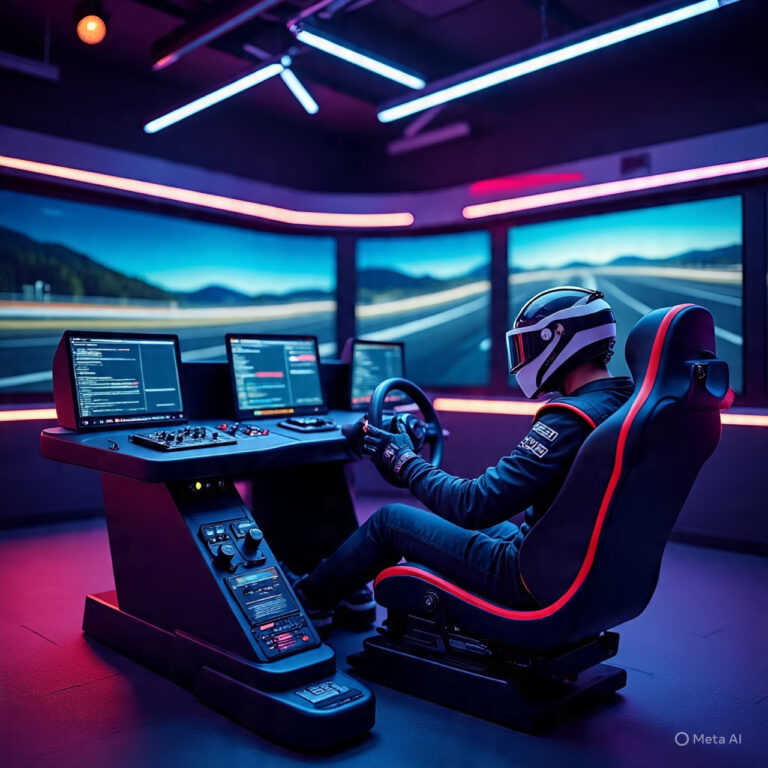
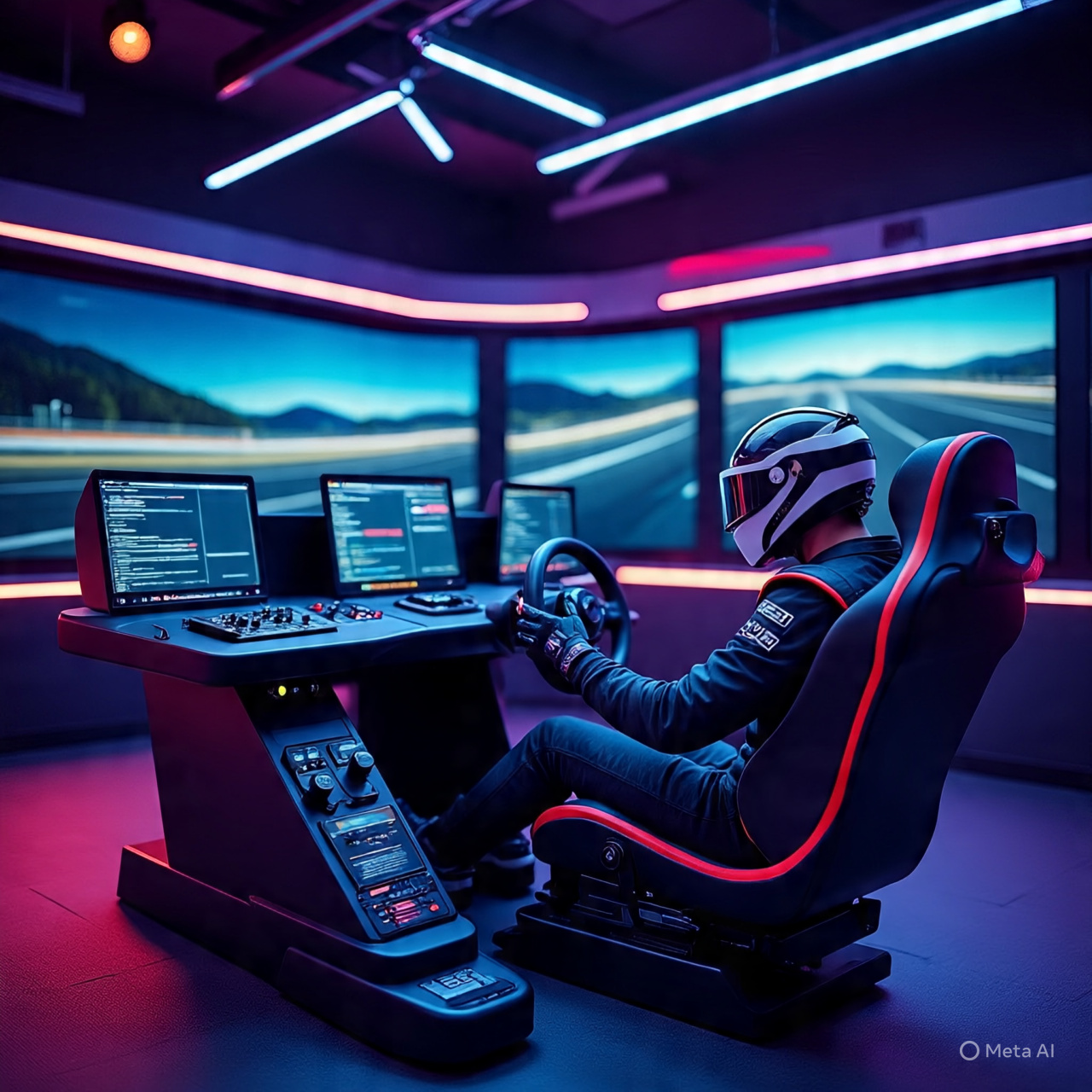
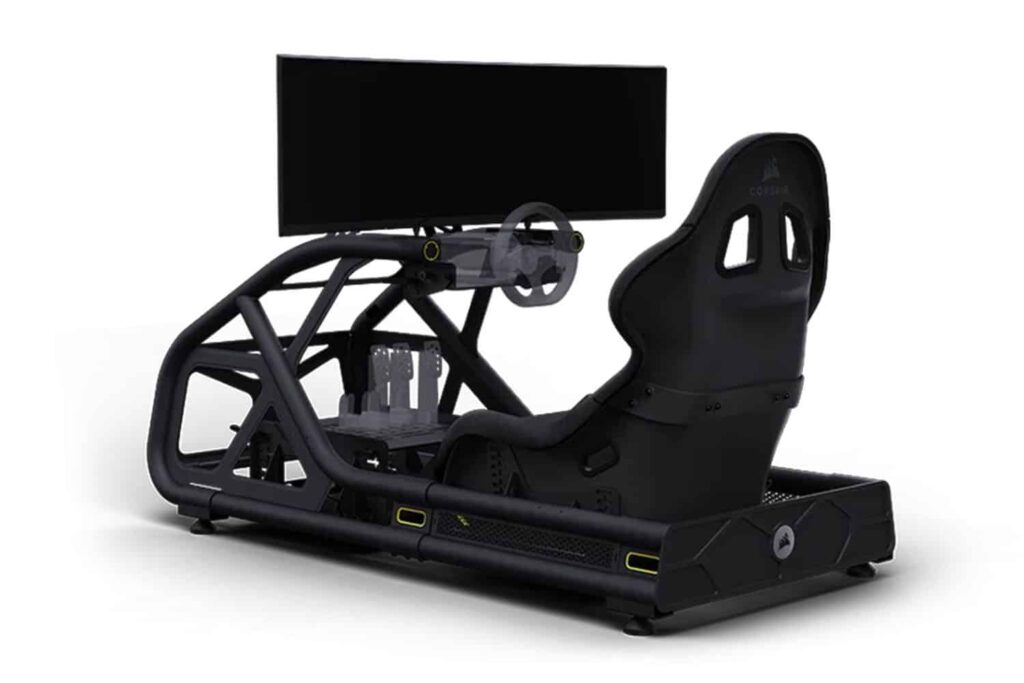
Sim Racing – The landscape of digital motorsports in 2026 has transitioned from a recreational pastime into a high-fidelity professional industry characterized by industrial-grade mechanical actuators, sophisticated signal processing, and integrated biological-mechanical feedback systems. The contemporary sim racing setup is no longer defined merely by its individual peripheral components but by the intricate synergy between high-torque direct drive motors, structurally rigid chassis architectures, and extreme computational throughput. As the boundary between professional racing and simulation continues to dissolve, the engineering requirements for a competitive setup have reached a point where the hardware must be analyzed with the same rigor as real-world racing components.
The Mechanical Core: Evolution and Standardization of Direct Drive Technology
The primary catalyst for the current level of immersion in sim racing has been the maturation and democratization of direct drive (DD) technology. In 2026, the industry has largely reached a consensus that geared and belt-driven systems are legacy technologies, relegated to the absolute entry-level segment, as the market favors the zero-latency, high-torque fidelity afforded by motors mounted directly to the steering shaft.
Direct Drive Topology and Signal Fidelity
The engineering of direct drive wheelbases has shifted from a simplistic focus on peak torque output to a sophisticated pursuit of signal clarity, thermal stability, and “detail fidelity.” During the early 2020s, the “torque wars” led manufacturers to prioritize raw Newton-meters (Nm), often at the expense of finesse. However, the 2026 generation of wheelbases, exemplified by the Simucube 3 series and the Asetek Invicta, highlights a transition toward refined motor control algorithms and reduced mechanical noise.
The Simucube 3 Ultimate, currently the flagship of the industry, features a 35 Nm peak torque and utilizes a revolutionary spoke-type Interior Permanent Magnet (IPM) motor. Unlike traditional Surface Permanent Magnet (SPM) motors used in the Simucube 3 Sport and Pro models, the IPM design allows for more dense magnetic fields, resulting in pinpoint accuracy and significantly sharper tactile feedback. This architectural shift addresses the “cogging” or “notching” historically associated with high-torque electric motors, providing a whisper-quiet performance that allows the driver to detect the most minute changes in tire slip or road surface texture. Each Simucube 3 wheelbase now undergoes a “laser-scanning” process during manufacture, creating a digital twin within the firmware to ensure that the control algorithms are uniquely calibrated to the individual motor’s physical characteristics.
| Wheelbase Model | Peak Torque (Nm) | Motor Type | Key Feature | Price Point (Approx.) |
| Simucube 3 Ultimate | 35 Nm | Spoke IPM | Laser-scanned calibration | $2,200+ |
| Simucube 3 Pro | 25 Nm | High-Response SPM | Link Quick Release | $1,599 |
| Simucube 3 Sport | 15 Nm | Refined SPM | Industrial-grade build | $1,100 |
| Fanatec ClubSport DD+ | 15 Nm | Direct Drive | Console Compatibility | €999 |
| Fanatec CSL DD (8Nm) | 8 Nm | Direct Drive | Ecosystem entry-point | €399 |
| Moza R25 Ultra | 25 Nm | Direct Drive | High-Torque Value | N/A |
| Moza R3 (Xbox) | 3.9 Nm | Direct Drive | Budget DD Standard | £339 |
| Logitech G Pro | 11 Nm | Direct Drive | TRUEFORCE integration | $999 |
| Asetek Invicta | 27 Nm | Direct Drive | Professional Grade | $1,500+ |
Wireless Power and Data Transmission Infrastructures
A significant technical bottleneck in previous hardware generations was the reliance on coiled USB cables for steering wheel connectivity, which often led to mechanical failures, signal interference, or restricted rotation in rally and drift applications. By 2026, the industry has widely adopted sophisticated wireless solutions for power and data transfer through the quick-release (QR) mechanism itself.
The Simucube LightBridge technology represents a pinnacle in this area, utilizing induction and optical data transfer to provide a contactless connection between the wheelbase and the steering wheel module. This “zero-wear” system ensures that data remains stable even under the extreme vibrations generated by high-torque motors. Similarly, the acquisition of Fanatec by Corsair in 2024 has led to increased standardization in QR2 systems, ensuring that power and high-speed data are delivered through a secure mechanical coupling, eliminating the need for external batteries or fragile connection pins that were prone to bending in the legacy QR1 design.
Consumer Market Dynamics and the “Direct Drive for All” Movement
The democratization of Direct Drive technology has fundamentally altered the entry-level market. In 2026, bundles such as the Moza R3 and the Fanatec CSL DD Ready2Race sets have made it possible for beginners to start with a DD system for under $500. This shift has largely obsoleted belt-driven systems from brands like Thrustmaster, although the latter has responded with the T598, an affordable DD bundle aimed at the mass market.
Professional-grade sentiment, however, remains focused on the “endgame” bases. Reviewers and enthusiasts often debate between the ultra-precise Simucube 3 and the high-torque Asetek Invicta, with a growing consensus that quality of feedback is more important than raw Nm after a certain threshold—typically 15-20 Nm—is reached. For many competitive racers, the 12-18 Nm range is considered the “sweet spot” for maintaining long-session endurance while still receiving all necessary telemetry data.
Biomechanical Interaction: The Science of High-Pressure Braking
While the steering wheelbase provides the primary sensory input for directional control, the pedal system is regarded by professional sim racers as the most critical component for achieving consistent lap times and race-winning performance. The transition from displacement-based sensing to pressure-based sensing has redefined how drivers interact with the virtual vehicle’s deceleration mechanics.
The Physics of Muscle Memory: Load Cell Technology
Load Cell technology utilizes a strain gauge to measure the physical force applied to the pedal, rather than the distance the pedal travels. This is fundamental to muscle memory; the human brain is significantly more efficient at repeating a specific pressure level than a specific limb position. In a high-stress racing scenario, a driver’s leg can more accurately replicate “80kg of pressure” than “4.5 centimeters of travel”.
The 2026 market offers a range of load cell solutions, from the accessible Moza SRP pedals to the professional-grade Logitech G Pro and Fanatec ClubSport V3 sets. These systems often utilize 100kg to 200kg sensors, providing a robust and low-maintenance solution for competitive racers. The durability of load cells is a major advantage, as they lack the moving parts of traditional potentiometer-based pedals, which are prone to dust ingress and signal degradation over time.
Hydraulic Systems and the Quest for Realism
Hydraulic sim racing pedals, such as the Asetek Invicta or BJ Sim Racing sets, offer a higher degree of realism by incorporating actual slave cylinders and fluid pressure. These systems mimic the “hard” feel of a real race car’s brake pedal, where the initial take-up is soft as the pads move toward the disc, followed by an immediate and extreme resistance as the system reaches its limit. While load cell pedals can get close to this sensation using various elastomers and springs, the linear and compressive feel of hydraulic fluid remains the benchmark for “true” realism. However, these systems require more maintenance, including periodic checks for leaks and the occasional need to bleed the lines, which can be a deterrent for casual users.
The Software-Defined Revolution: Simucube ActivePedal
The introduction of the Simucube ActivePedal has represented a paradigm shift by replacing traditional mechanical resistance (springs, elastomers, or fluids) with a high-torque actuator controlled entirely by software. This allows the driver to “program” the pedal’s physical behavior to an unprecedented degree.
- Dynamic Customization: Through the Simucube Tuner 3.0 software, a driver can switch from the feel of a 1960s road car (long travel, soft resistance) to a modern Formula 1 car (zero travel, 150kg resistance) in seconds, requiring no physical hardware changes.
- Active Feedback Integration: Unlike passive pedals, the ActivePedal translates telemetry data directly into tactile sensations. ABS vibrations, traction control kicks, and engine RPM can be felt through the sole of the driver’s foot, providing critical information that was previously only available through auditory or visual cues.
- Precision and Linearity: By measuring force digitally across multiple dimensions and using digital signal processing, these systems eliminate the “amplifier noise” and non-linearities that could sometimes plague early load cell designs.
| Pedal Type | Mechanism | Primary Benefit | Target User |
| Potentiometer | Travel Distance | Low Cost | Absolute Beginner |
| Load Cell | Force Measurement | Consistency/Muscle Memory | Competitive Racer |
| Hydraulic | Fluid Compression | Authentic Realism | Immersion Enthusiast |
| Active | Software Actuator | Versatility/Active FFB | Professional/High-Budget |
Structural Architecture: Chassis Rigidity and the 8020 Paradigm
The immense power of modern direct drive wheelbases—reaching up to 35 Nm—and the high pressure required by 150kg load cell pedals necessitate a platform with extreme structural rigidity. Any mechanical flex or movement within the chassis results in a “deadening” of the feedback; the force feedback is absorbed by the frame’s movement rather than being transmitted to the driver’s hands and feet.
The Industrial Standard: Aluminum Extrusion (8020)
In 2026, aluminum extrusion rigs, commonly referred to as “8020” rigs (named after the common 80mm x 20mm profile standard), have become the industry benchmark for serious sim racing. These frames, such as the Sim-Lab P1X Pro and the Next Level Racing F-GT Elite 160, utilize heavy-duty T-slot aluminum profiles that offer near-infinite adjustability and absolute rigidity.
The modularity of the 8020 system allows for the seamless integration of heavy accessories—including triple monitor stands, sequential shifters, handbrakes, and motion actuators—without compromising the integrity of the primary structure. For the high-torque environments of 2026, manufacturers have moved toward “front-mount” or “side-mount” solutions for wheelbases, which distribute torque more evenly across the frame than traditional top-down plates.
Specialized Geometries and All-in-One Solutions
While 8020 remains the choice for versatility, specialized rigs have emerged to cater to specific ergonomic requirements or space constraints. The Trak Racer Alpine TRX, for example, utilizes a 2-inch industrial-strength iron chassis to support quick transitions between an upright GT seating position and a feet-up Formula 1 position.
For users with limited space, foldable rigs like the Next Level Racing F-GT Lite or wheel stands like the GT Omega Apex provide a necessary compromise. While these do not offer the same rigidity as a permanent aluminum frame, they are designed to handle lower-powered direct drive bases (up to ~8 Nm) without excessive shaking or flex.
| Rig Category | Recommended Model | Material | Benefit |
| Best 8020 | Sim-Lab P1X Pro | Aluminum Extrusion | Absolute Rigidity |
| Best Formula | Trak Racer Alpine TRX | Industrial Iron | True F1 Position |
| Best Budget 8020 | Sim-Lab GT1 Pro | Aluminum Extrusion | Professional Entry |
| Best Foldable | NLR F-GT Lite | Steel Tube | Space Saving |
| Best Wheel Stand | GT Omega Apex | Steel | Portability |
Visual Immersion: The Triple-Screen, Ultrawide, and VR Continuum
The display market in 2026 is divided among three primary philosophies: Triple Monitor setups, Super Ultrawide displays, and Virtual Reality (VR). Each offers a different balance of spatial awareness, visual clarity, and physiological comfort.
The Competitive Apex: Triple Monitor Geometry
For professional league racing (e.g., iRacing or Assetto Corsa Competizione), triple 32-inch 1440p or 4K monitors remain the gold standard. This setup provides approximately 160 degrees of horizontal field of view (FOV), allowing the driver to see opponents in their peripheral vision without turning their head.
The mathematical precision of the FOV calculation is essential for high-level performance. In 2026, drivers utilize sophisticated FOV calculators to ensure a 1:1 relationship between virtual objects and real-world perception. Setting an incorrect FOV can lead to “fish-eye” distortion, making distance judgment impossible and causing drivers to miss braking points or apexes.
The horizontal Field of View ($hFOV$) for a single monitor can be calculated using the viewing distance ($d$) and the width of the screen ($w$):
$$hFOV = 2 \cdot \arctan\left(\frac{w}{2d}\right)$$
For triple screens, the side monitors are angled ($\theta$) to wrap around the driver’s head—typically between 45 and 60 degrees—to minimize distortion across the entire panoramic view. The primary disadvantage of this setup is the extreme demand on the Graphics Processing Unit (GPU), which must render three high-resolution images simultaneously, often requiring an RTX 4080 or better to maintain acceptable frame rates.
The Convenience of the Super Ultrawide
The 49-inch Super Ultrawide (32:9 aspect ratio) has captured a significant portion of the mid-to-high-end market. These displays, such as the Samsung Odyssey G9 series, offer the advantage of a single, bezel-free image and a significantly easier setup process than triple monitors. While they offer approximately 75% of the advantages of a triple setup, they lack the full wrap-around peripheral awareness required for intense side-by-side racing in dense grids. OLED models in this category are particularly popular for their deep blacks and vibrant colors, which are transformative for night racing and endurance events.
Virtual Reality and the Immersion Paradox
Virtual Reality (VR), using high-resolution headsets such as the Meta Quest 3, Varjo Aero, or PSVR2, provides the most natural depth perception and spatial awareness. VR allows the driver to look “through” a corner and naturally track the apex as they would in a real vehicle. However, by 2026, VR remains a secondary choice for many professional league racers due to several persistent factors:
- Thermal and Physical Fatigue: Long sessions (over 1.5 hours) generate significant heat on the driver’s face and physical strain from the headset’s weight, which can lead to a decrease in consistency.
- Visual Clarity and HUD Readability: Even the latest high-resolution headsets cannot match the pixel density and crispness of high-end monitors, making distant braking markers or small HUD elements harder to distinguish.
- Infrastructure Demands: Maintaining a consistent 90-120 FPS per eye in VR is extremely demanding, often requiring the highest-tier PC hardware and sacrificing graphical detail to ensure smooth performance.
| Display Type | Field of View | GPU Demand | Advantage | Disadvantage |
| Triple 32″ | 160° – 180° | Extreme | Max Awareness | Space & Complexity |
| 49″ Ultrawide | 90° – 120° | High | Bezel-free | Less Peripheral View |
| VR Headset | 360° (Natural) | Extreme | Absolute Immersion | Comfort & Fatigue |
Computational Infrastructure: The 2026 Sim Racing PC Standard
As sim racing software—including Assetto Corsa Evo and the 2026 updates for iRacing—continues to push for greater graphical fidelity and physics complexity, the PC requirements have scaled accordingly.
GPU Demands and AI-Driven Upscaling
The 2026 “Ultimate” sim racing PC is largely defined by the NVIDIA RTX 50-series architecture. While the RTX 4080 and 4090 remain highly capable, the newer RTX 5080 and 5090 provide the necessary overhead for running triple 4K monitors or high-resolution VR at refresh rates above 144Hz with maximum settings.
A critical development is the integration of DLSS 4.5, which uses advanced AI frame generation and ray reconstruction to provide smooth performance in titles with heavy ray-tracing and complex environmental effects. Without these AI-driven technologies, maintaining the “fluidity” required for high-level racing—where input lag must be kept to a minimum—would be mathematically impossible at modern resolutions.
CPU and Memory Bottlenecks in Physics Simulation
Sim racing is uniquely CPU-intensive compared to many other gaming genres because the physics engine must calculate tire deformation, suspension geometry, aerodynamics, and drivetrain torque for a full grid of 20 to 60 cars simultaneously at extremely high tick rates.
- Processor Standards: The Intel Core i9-14900K or the AMD Ryzen 7 7800X3D (widely praised for its 3D V-Cache which benefits simulation) are considered the standard for high-end builds in 2026.
- Memory Requirements: While 16GB was the standard for the early 2020s, 2026 builds require a minimum of 32GB of DDR5-6000+ RAM to handle the massive texture loads and complex telemetry data of modern simulators. For users who also stream or edit racing content, 64GB is now the recommended configuration.
- High-Speed Storage: The sheer volume of content—iRacing’s full track and car library alone can exceed 100GB—makes a 2TB NVMe Gen 5 SSD essential for rapid track loading and overall system responsiveness.
| Component | Minimum (Beginner) | Recommended (Competitive) | Ultimate (2026 Pro) |
| CPU | 4-Core i5 / Ryzen 3 | 8-Core i7 / Ryzen 7 | 20-Core i9 / Ryzen 9 |
| GPU | GTX 1660 / RX 580 | RTX 4070 / RX 7900 | RTX 5090 / RTX 4090 |
| RAM | 16GB DDR4 | 32GB DDR5 | 64GB DDR5 |
| Storage | 512GB SSD | 1TB NVMe SSD | 4TB NVMe Gen 5 SSD |
Motion Platforms and Tactile Haptics: Replicating G-Forces
The final frontier of sim racing in 2026 is the replication of physical G-forces and chassis vibrations through active motion platforms and haptic feedback systems.
Electromechanical High-Frequency Actuators: The D-BOX Standard
The D-BOX G5 haptic system represents the professional benchmark for motion in 2026. Utilizing electromechanical actuators rather than traditional hydraulic or pneumatic systems, the G5 provides silent, high-frequency vibrations that replicate track textures, curb strikes, and engine harmonics with sub-millisecond latency. These “tactile” cues are often more valuable to a driver than large-scale pitch and roll, as they provide immediate physical feedback on the vehicle’s state and the limit of tire adhesion.
Seat Movers vs. Full-Chassis Motion Philosophy
The market in 2026 offers two distinct philosophies for motion integration:
- Full-Chassis Movers: Systems like the Sigma Integrale DK series or the Next Level Racing Motion Plus move the entire rig (including the monitors, wheelbase, and pedals). This ensures that the driver’s relationship with the controls remains constant even under heavy movement, which is critical for maintaining precision.
- Seat Movers: The Next Level Racing Motion Platform V3 moves only the seat, simulating the internal feeling of G-forces acting on the driver’s body. While more compact and significantly more affordable (approximately $3,000), seat movers can sometimes cause the driver’s reach to the steering wheel to vary during extreme movements, which may require a period of adaptation.
Tactile Transducers and Haptic Pads
For setups where a full motion platform is not feasible, haptic transducers (such as “Buttkickers” or the HF8 Gaming Pad) have become a standard inclusion. These devices translate audio-based telemetry or dedicated software signals into physical vibrations, providing an affordable way to feel engine RPM, gear shifts, and ABS activation, which significantly enhances the immersive experience for a fraction of the cost of motion actuators.
Ergonomics and Environment: Optimization for Human Performance
The physical configuration of the sim racing setup is as vital as the hardware itself. Poor ergonomics lead not only to discomfort and potential long-term repetitive strain injuries but to a quantifiable decrease in performance and concentration over the course of a race.
Biomechanical Seating and Control Placement
- Steering Geometry: The 2026 ergonomic standard dictates that the steering wheel should be positioned so that the driver’s elbows are bent at approximately 90-110 degrees when holding the wheel at the 9 and 3 positions. This ensures a full range of motion without straining the shoulders or wrists.
- Pedal Alignment and Pressure: The pedals should be mounted at a distance where the legs remain slightly bent even at full compression of the brake. This prevents knee joint locking and allows for more precise modulation of the high-pressure load cell or hydraulic systems.
- Monitor Positioning: The center of the primary monitor should be precisely at the driver’s eye level when in the racing position. This minimizes neck tilt and supports a neutral posture, reducing eye fatigue during long endurance stints.
Thermal and Environmental Management
Professional sim racing is a physically demanding activity that generates significant heat. In 2026, the best setups include environmental management:
- Telemetry-Controlled Airflow: High-torque wheelbases and multi-monitor setups generate substantial heat. Integrated fans, often controlled by game telemetry to mimic “wind” as the vehicle’s speed increases, serve the dual purpose of cooling the driver and increasing the immersion of open-cockpit racing.
- Lighting and Glare Reduction: Ambient, diffused lighting is recommended to reduce eye fatigue. Professional setups often utilize blackout curtains and LED accent lighting to create a focused environment free from screen glare.
- Cable Management Standards: With the proliferation of USB devices (wheel, pedals, shifter, handbrake, button boxes, motion systems, haptics), professional-grade cable management is essential for safety and reliability. High-end rigs utilize the T-slots in aluminum profiles to hide cables, often securing them with Velcro ties and adhesive clips to prevent “cable drag” on the wheelbase.
Software Landscapes and the 2026 Competitive Infrastructure
In 2026, the sim racing software market has consolidated into specialized segments, each catering to different driver priorities and racing disciplines.
iRacing: The Professional Benchmark
iRacing remains the undisputed leader for organized, competitive online racing. Its subscription-based model provides a centralized infrastructure with official schedules, safety ratings (SR), and driver ranking (iRating) systems that ensure high-quality competition. The 2026 season of iRacing has introduced hyper-realistic track evolution, where rubber buildup, track temperature, and marble formation dynamically affect grip throughout a race weekend.
The Assetto Corsa Legacy and AC Evo
The original Assetto Corsa remains remarkably relevant in 2026 due to its unparalleled modding community. It serves as the ultimate “sandbox” for everything from street car drifting to rally conversions. Meanwhile, Assetto Corsa Competizione (ACC) continues to be the benchmark for GT3 and GT4 racing, praised for its tire physics and faithful recreation of the GT World Challenge atmosphere.
Emerging Physics Frontiers: BeamNG.drive and Rennsport
For drivers who prioritize structural realism, BeamNG.drive’s soft-body physics engine provides the most detailed simulation of vehicle deformation and mechanical failure. Simultaneously, newer platforms like Rennsport have begun to challenge the established order by focusing on high-fidelity graphics and professional esports integration, aiming to provide a more modern alternative to the aging architectures of some established sims.
Market Trends and the 2026-2027 Industry Outlook
As the industry moves toward the latter half of the decade, several key trends are defining the future of the market.
Ecosystem Consolidation vs. Boutique Engineering
The sim racing hardware market is experiencing a period of intense consolidation on one hand and hyper-specialization on the other. The acquisition of Fanatec by Corsair in 2024 has signaled the entry of major consumer electronics giants into the high-end simulation space. This is expected to lead to better global distribution and after-sales support but has also raised concerns among enthusiasts about the potential “gamification” of professional-grade products.
Conversely, boutique brands like Simucube, Asetek, and VNM continue to thrive by focusing on ultra-high-end engineering and open ecosystems that allow users to mix and match hardware from different manufacturers. The use of universal standards like the Simucube Link Hub and the move toward open-source telemetry APIs is a direct response to the “walled garden” approach of some larger brands.
AI and Machine Learning in Force Feedback and Coaching
Artificial Intelligence has moved from a theoretical concept to a core infrastructure layer in 2026.
- AI-Enhanced Signal Processing: Modern wheelbases now use local AI models to “clean” the raw force feedback signals from simulators, removing digital artifacts and “canned” effects to provide a more organic and communicative feel.
- Dynamic Telemetry Coaching: AI “agents” integrated into the simulation software can now provide real-time verbal coaching, analyzing a driver’s braking points and throttle traces against “perfect” laps and suggesting immediate adjustments to improve lap times.
- Predictive Tire Models: AI is being utilized to simulate more complex tire-to-road interactions, particularly in variable weather conditions, allowing for more realistic transitions between wet and dry racing lines.
The 2026 “Brutal Year” for Hardware
Industry analysts have described 2026 as a “brutal” year for sim racing hardware, as the rapid pace of innovation has led to a cycle where many flagship products from just two years ago are being superseded by significantly more capable technology at lower price points. This has created a highly competitive buyer’s market but has also led to a more complex landscape for consumers trying to navigate the various compatibility requirements and ecosystem lockdowns.
Common Pitfalls and the Psychology of Performance
Despite the availability of ultra-high-end equipment, beginners and intermediate racers frequently make mistakes that hinder their progress.
The “Expensive Equipment” Misconception
One of the most persistent myths in the 2026 sim racing community is that more expensive hardware automatically equals faster lap times. While high-end pedals and wheelbases provide more information and consistency, they do not correct fundamental driving errors. Consistency comes from practice and a deep understanding of weight transfer, which can be learned on a mid-range setup like a Logitech G Pro as effectively as on a $30,000 motion rig.
Common Technical and Tactical Errors
- Overdriving and Lack of Patience: New racers often try to “win the race on the first corner,” leading to incidents and safety rating penalties. Professional drivers focus on “slow in, fast out,” prioritizing corner exit speed over late braking.
- The “Racing Line” Assist Trap: Relying on the visual racing line assist creates “robotic” habits, where the driver focuses on a colored line rather than the track’s physical markers. Removing assists early is considered essential for developing true car control and spatial awareness.
- Incorrect FFB Settings: Many users set their force feedback too high, causing “clipping” where the motor reaches its maximum output and can no longer transmit fine details. Professional setups are typically dialed back to ensure the full dynamic range of the signal is preserved.
Summary of 2026 Strategic Recommendations
For an individual or professional organization constructing a sim racing setup in the 2026 environment, the following priorities are established by the current state of industry research and engineering:
- Chassis First: The rig is the foundation of the entire system. Investing in a high-quality aluminum extrusion (8020) frame is more important than the specific wheelbase choice, as it ensures that any future upgrades are not hindered by mechanical flex.
- Pedals over Steering: The largest performance gain in digital motorsports comes from high-fidelity pedals. A driver should prioritize a professional set of load cell or active pedals over a high-torque wheelbase if the budget is constrained.
- Optics and FOV Science: Regardless of the display type chosen (Triples, Ultrawide, or VR), the correct mathematical setup of the Field of View is the single most important software configuration for maintaining realism and distance judgment.
- Ecosystem Consideration: Before committing to a brand, analyze the long-term roadmap and accessory compatibility. Brands like Fanatec/Corsair and Moza offer vast ecosystems that simplify the upgrade path, while boutique brands offer superior performance for those willing to manage more complex configurations.
The sim racing setup of 2026 has reached a level of technological maturity where it serves as a legitimate extension of professional motorsports. The integration of high-torque direct drive motors, software-defined kinetic feedback, and extreme computational power has created a training and competition environment that is unparalleled in the history of simulation. As the industry continues to evolve into 2027, the focus is likely to shift further toward AI-integrated feedback and more seamless biomechanical interfaces, further blurring the line between the virtual and real-world track.
Frequently Asked Questions About Sim Racing Setups
1. What is the main advantage of a Direct Drive (DD) wheelbase? Direct Drive technology mounts the steering wheel directly to the motor shaft, providing zero-latency, high-torque force feedback. This results in significantly higher signal fidelity and detail compared to legacy belt or gear-driven systems, allowing drivers to feel minute changes in tire slip and road texture.
2. Why is structural rigidity important for a sim racing rig? High-performance direct drive motors can generate up to 35 Nm of torque, which can cause weaker frames to flex or shake. Structural rigidity ensures that all force feedback is transmitted directly to the driver’s hands rather than being absorbed by the movement of the chassis, preserving feedback clarity.
3. What is the difference between load cell and potentiometer pedals? Potentiometer pedals measure the distance the pedal travels, while load cell pedals measure the actual pressure or force applied. Measuring pressure is superior for building muscle memory, as the human brain can replicate specific force levels more accurately than leg positions.
4. Are hydraulic pedals better than load cell pedals? Hydraulic pedals offer the most realistic sensation by using actual fluid compression to mimic a real race car’s brake feel. While load cell pedals are highly precise and require less maintenance, hydraulic systems provide a more “authentic” progressive resistance that serious sim racers prefer for ultimate immersion.
5. What is the “Golden Standard” for sim racing cockpits in 2026?
Aluminum extrusion rigs, often called “8020” rigs (such as the Sim-Lab P1X Pro), are considered the industry standard. They offer near-infinite adjustability and extreme rigidity, allowing users to mount high-torque wheelbases and heavy pedal sets without mechanical flex.
6. How do I choose between triple monitors, ultrawide displays, and VR? Triple monitors provide the best peripheral awareness and visual clarity for competitive league racing. Ultrawides offer a simpler, bezel-free setup that saves space, while VR provides absolute immersion and depth perception, which is particularly beneficial for rally and off-road titles.
7. What are the minimum PC requirements for modern simulators in 2026? For popular titles like iRacing, the absolute minimum includes a 4-core CPU (e.g., i5-4460), 16GB of RAM, and a GPU with at least 4GB of VRAM (e.g., GTX 1060). However, for high-end performance or triple-screen setups, 32GB of RAM and an RTX 4070 or better are recommended.
8. What is a Simucube ActivePedal? The ActivePedal is the first pedal system to use a software-controlled actuator instead of physical springs or elastomers. This allows the driver to program the pedal’s feel (e.g., travel, stiffness) and receive active haptic feedback for effects like ABS, traction control, and engine RPM.
9. Why is Field of View (FOV) calculation necessary? Correct FOV settings create a $1:1$ relationship between the virtual world and your real-world perception. An incorrect FOV can cause “fish-eye” distortion, making it difficult to judge distances to apexes and braking markers, which directly impacts lap time consistency.
10. How can I improve my braking consistency? Consistency is primarily improved by using load cell or hydraulic pedals that rely on pressure rather than travel. Additionally, practicing the “slow in, fast out” principle—braking slightly earlier to ensure a smoother corner exit—helps maintain higher average speeds.
11. What are the best cable management practices for a sim rig? For aluminum profile rigs, cables can be tucked directly into the T-slots and covered with plastic inserts for a hidden look. Using Velcro ties, cable sleeving, and mounting a powered USB hub directly to the chassis also helps maintain a clean, safe racing environment.
12. What is Simucube Link? Simucube Link is a unified platform that connects all peripherals (wheelbase, pedals, etc.) through a single hub using a low-latency protocol. This reduces USB clutter and ensures a stable, responsive connection between hardware and the simulation software.
13. Do I need a motion platform to be fast? No, motion platforms are designed for immersion rather than speed. While they provide physical cues for G-forces and track textures, most professional racers focus on high-quality pedals and a rigid chassis as the primary tools for performance.
14. What is a haptic transducer (e.g., ButtKicker)?
A haptic transducer is a device that attaches to your rig and converts audio or telemetry data into physical vibrations. This allows you to “feel” engine RPM, gear shifts, and tire slip through your seat, providing extra sensory data without the cost of a full motion platform.
15. Can I run iRacing or Assetto Corsa on a gaming laptop? Yes, most modern gaming laptops can run these simulators effectively if they have a dedicated GPU (like an RTX 4060) and at least 16GB of RAM. It is important to maximize the GPU at the time of purchase, as it cannot be upgraded later.
Conclusion
The 2026 sim racing ecosystem has evolved into a sophisticated blend of mechanical engineering and digital precision. Achieving a top-tier experience requires balancing three core pillars: a rigid structural foundation (8020 chassis), high-fidelity input devices (direct drive wheels and pressure-based pedals), and mathematically accurate visual/computational environments. By prioritizing hardware that supports muscle memory and consistent feedback, racers can bridge the gap between virtual simulation and real-world performance.