Introduction: Defining an Era’s Rivalry
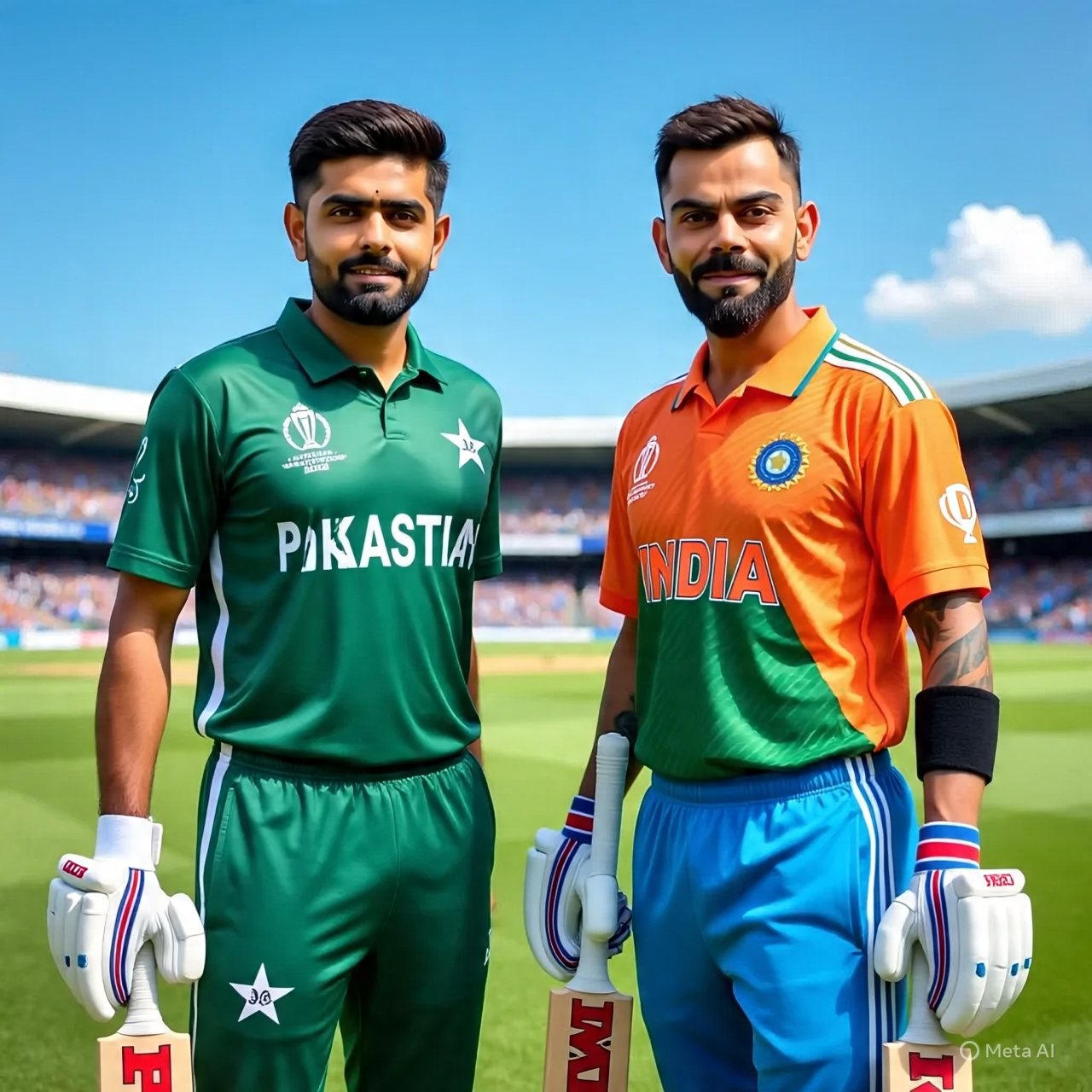
In the ever-evolving landscape of cricket, few comparisons generate as much passionate debate as that between India’s Virat Kohli and Pakistan’s Babar Azam. As of early 2026, with Kohli at 37 and Babar at 31, their careers represent overlapping but distinct epochs of batting excellence. Kohli, the established legend in his twilight years, and Babar, the contemporary superstar entering his prime, offer a fascinating study in contrasting styles, career trajectories, and statistical brilliance. This analysis comprehensively evaluates their achievements, techniques, and impacts on the game through the first quarter of 2026.
Career Trajectory & Batting Philosophy
Virat Kohli: The Chase Master
Kohli’s career (debut 2008) represents modern batting’s gold standard for consistency across formats. His journey has seen several distinct phases:
- The Aggressive Prodigy (2008-2012): Announced himself with aggressive strokeplay and temperament
- The Dominant Force (2013-2019): Arguably the peak years, averaging over 60 in ODIs and Tests simultaneously
- The Veteran Leader (2020-2024): Captaincy burdens and a technical dip followed by remarkable resurgence
- The Refined Elder Statesman (2025-2026): Selective playing, focusing on major tournaments with refined technique
Kohli’s batting is built on impeccable cover drives, relentless running between wickets, peerless chase mastery, and an insatiable hunger for big scores. His game combines classical technique with modern fitness and intensity.
Babar Azam: The Elegant Technician
Babar’s rise (debut 2015) represents Pakistan’s most consistent batting talent since Javed Miandad:
- The Promising Talent (2015-2019): Gradual ascent across formats with trademark elegance
- The World’s #1 (2020-2022): Reached top rankings in multiple formats simultaneously
- The Captain & Cornerstone (2023-2025): Shouldered leadership across all formats amidst team instability
- The Post-Captaincy Refocus (2026): Recently relieved of captaincy to focus purely on batting
Babar’s game is characterized by pristine timing, economical footwork, risk-averse accumulation, and what many consider the most aesthetically pleasing technique of his generation. He excels in building innings rather than explosive destruction.
Statistical Analysis (All International Cricket, Updated to Early 2026)
Test Cricket
| Metric | Virat Kohli | Babar Azam |
|---|---|---|
| Matches | 115+ | 55+ |
| Innings | 195+ | 100+ |
| Runs | 8,850+ | 4,200+ |
| Average | 49.2 | 47.8 |
| Centuries | 29 | 10 |
| 50s | 30 | 26 |
| Highest Score | 254* | 196 |
Context Analysis: Kohli’s superior volume reflects both longevity and his peak years (2016-2019) where he averaged 63.5. Babar’s average is impressive given Pakistan’s often challenging batting conditions and less stable top order. Kohli’s 7 double-centuries to Babar’s 1 represents a key differentiator in converting starts.
ODI Cricket
| Metric | Virat Kohli | Babar Azam |
|---|---|---|
| Matches | 295+ | 120+ |
| Innings | 280+ | 117+ |
| Runs | 13,850+ | 5,800+ |
| Average | 58.7 | 56.9 |
| Centuries | 50 | 21 |
| 50s | 72 | 35 |
| Strike Rate | 93.5 | 89.2 |
Context Analysis: This is Kohli’s strongest format statistically, with his average and 50+ centuries being historical landmarks. Babar’s numbers place him among the all-time great ODI batsmen already. Kohli’s superior strike rate, particularly in chases (65% success rate in ODIs he’s played), remains unmatched. Babar has 3 ODI scores above 150 to Kohli’s 8.
T20 International
| Metric | Virat Kohli | Babar Azam |
|---|---|---|
| Matches | 125+ | 115+ |
| Innings | 118+ | 109+ |
| Runs | 4,100+ | 4,000+ |
| Average | 52.7 | 41.5 |
| Strike Rate | 138.2 | 128.5 |
| Centuries | 1 | 3 |
| 50s | 38 | 36 |
Context Analysis: Kohli’s T20I average is statistically miraculous. Babar has more centuries but scores slightly slower. Kohli’s 2022 T20 World Cup (296 runs at 98.66) and 2014 edition (319 runs at 106.33) showcase his big-tournament pedigree. Babar was the fastest to 3,000 T20I runs but has faced criticism for his Powerplay strike rate.
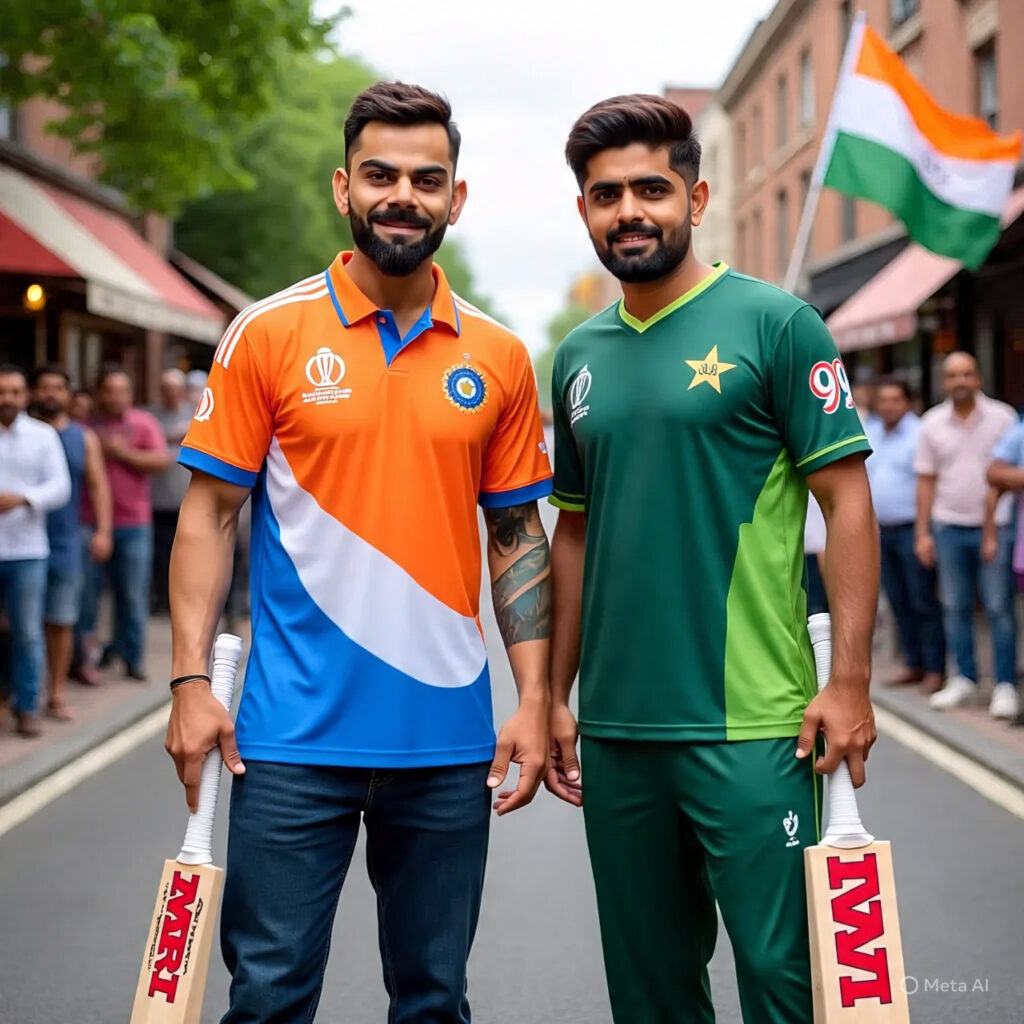
Captaincy & Leadership Impact
Kohli’s Captaincy (2014-2022)
- Test: Most successful Indian Test captain (40 wins in 68 matches)
- Overseas wins in Australia, England, South Africa
- Fostered aggressive fast-bowling culture
- Drawbacks: Never won an ICC trophy as captain, sometimes overly aggressive tactics
Babar’s Captaincy (2020-2025)
- Achievements: Took Pakistan to #1 in ODI rankings, 2022 T20 World Cup final
- Consistency: Maintained respectable rankings across formats
- Challenges: Struggled with bowling resources and team selection controversies
- Legacy: Often praised for dignified leadership but questioned for tactical flexibility
Key Performance Indicators
ICC Tournament Performances
Kohli:
- 2x ICC Cricketer of the Year (2017, 2018)
- Player of Tournament: 2014 T20 World Cup, 2016 T20 World Cup
- 50+ average in World Cup knockout matches
- 2023 ODI World Cup: 765 runs (record), average 95.62
Babar:
- ICC ODI Player of the Year 2022
- 2021 T20 World Cup: Tournament’s leading run-scorer
- 2023 ODI World Cup: Disappointing by his standards (320 runs @ 40)
- 2024 T20 World Cup: Strong performance (350+ runs @ 58+)
Awards & Rankings
- Kohli: 4x ICC ODI Player of Year, 2x ICC Test Player of Year, 78 months as ODI #1 (record)
- Babar: Simultaneously ranked #1 in ODIs and T20Is (2021-2022), #1 Test batter (2022)
Milestones
- Kohli: Fastest to 8k, 9k, 10k, 11k, 12k, 13k ODI runs; Only player with 50+ averages in all three formats
- Babar: Fastest to 2k and 3k T20I runs; Quickest to 5k ODI runs as captain
Technical Comparison
Strengths
Kohli:
- Unmatched cover drive
- Whip through mid-wicket
- Running between wickets (fitness)
- Handling pressure in chases
- Adaptability across conditions
Babar:
- Pristine straight drive
- Late decision-making
- Balance and elegance
- Consistency across conditions
- Risk management
Weaknesses
Kohli:
- 2014 England tour outside-off corridor issues
- Occasional dip in form (2020-2021)
- Sometimes over-aggressive early
Babar:
- Strike rate concerns in T20 Powerplays
- Converting 100s to 150+ scores
- Relative weakness against high-quality leg spin
Impact Beyond Statistics
Kohli’s Legacy
- Revolutionized Indian cricket fitness standards
- Commercial powerhouse (most followed cricketer globally)
- Bridged generations between Tendulkar and new era
- Cultural impact as aggressive, passionate competitor
Babar’s Impact
- Restored pride in Pakistani batting after spot-fixing era
- Provided stability to mercurial batting lineups
- Became youngest to captain Pakistan across formats
- Commercial face of Pakistan cricket globally
The Early 2026 Context
As of early 2026, their careers are at different crossroads:
- Kohli has scaled back his schedule, playing primarily Tests and major ICC events. His 2023-2025 resurgence (including a historic 2023 World Cup) silenced retirement talks. He now chases the elusive ICC trophy as player and mentors the next generation.
- Babar, recently relieved of captaincy, enters what should be his peak batting years unburdened by leadership. His challenge is to convert consistent 50s into match-winning 150s and secure his first ICC trophy for Pakistan.
Conclusion: Complementary Excellence
This comparison reveals not a definitive superiority but complementary greatness:
Choose Kohli if you value:
- Statistical dominance, particularly in ODIs
- Big-match temperament and chase mastery
- Transformational impact on team culture
- Longevity and consistency across a 15+ year career
- Aggressive, fitness-based approach to modern batting
Choose Babar if you value:
- Aesthetic perfection and technical purity
- Simultaneous excellence across formats in contemporary era
- Grace under pressure in unstable team environments
- Earlier career consistency (averaged 50+ in first 100 innings across formats)
- Representing Pakistan’s batting renaissance
The numerical edge clearly belongs to Kohli in volume and achievements—his 50+ ODI centuries, Test captaincy record, and big-tournament performances create a CV that places him among the top 5 batters of all time. However, Babar’s achievement of reaching #1 across formats in an era of specialized batting, combined with his aesthetic appeal and significance to Pakistani cricket, makes him a once-in-a-generation talent for his nation.
Ultimately, their rivalry has enriched cricket, providing fans with contrasting visions of batting excellence. Kohli’s career represents what’s possible with relentless drive and evolution, while Babar’s demonstrates the enduring value of classical technique in modern cricket. As both continue to add chapters to their stories in early 2026, they have already secured their places among the pantheon of batting greats—separated by era and style, but united in their mastery of the craft.