Torpedo Bat
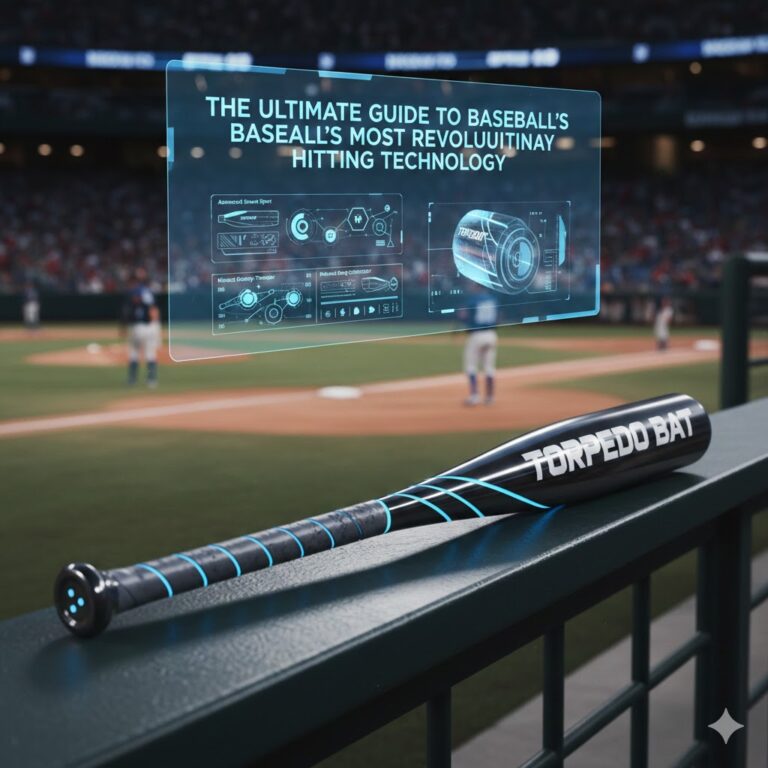
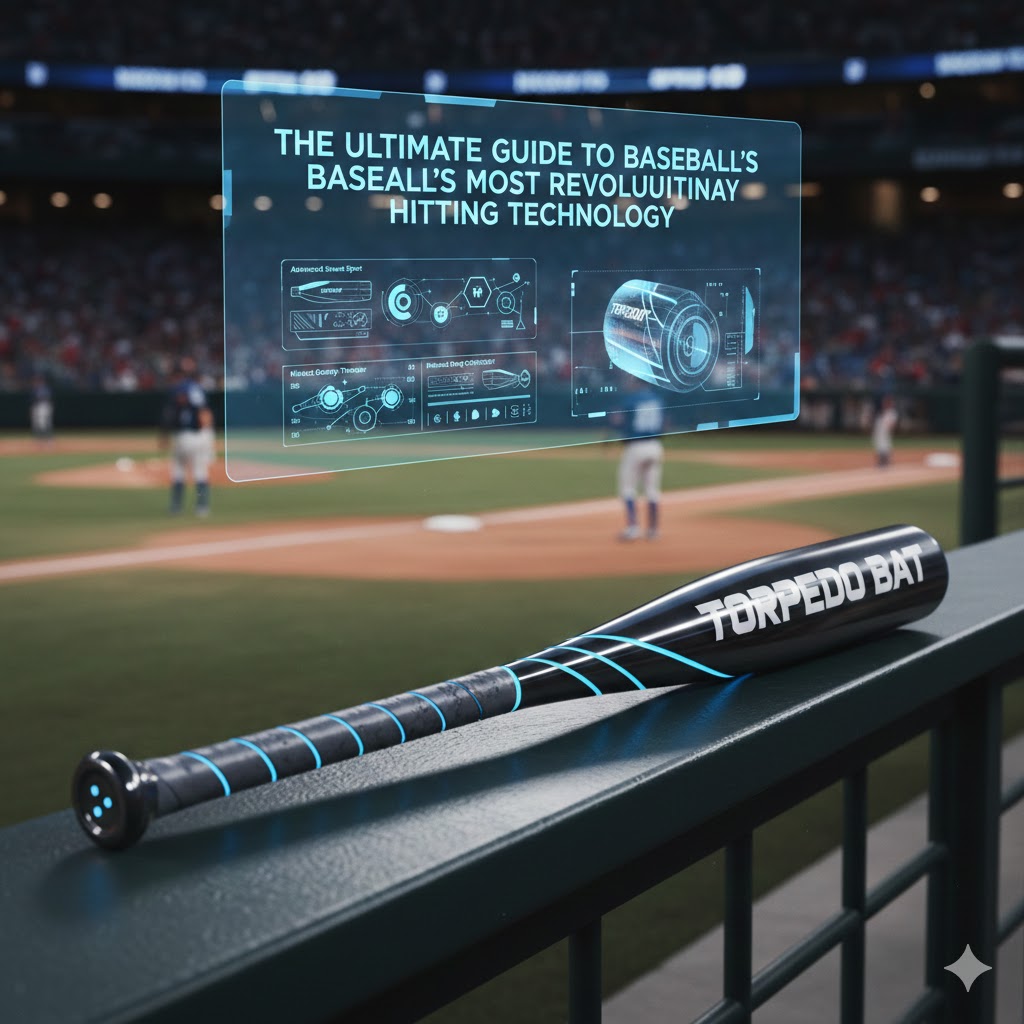
Torpedo Bat – The game of baseball has long been characterized by a tension between tradition and technological advancement. For over a century, the primary tool of the trade—the wood bat—remained remarkably stagnant in its fundamental design: a cylindrical implement with a handle that flared into a barrel, tapering uniformly toward the end. However, the emergence of the “Torpedo Bat” in the mid-2020s represents one of the most significant architectural shifts in the history of the sport. This design, often described as having a “bowling-pin” silhouette, is the physical manifestation of high-level physics applied to the split-second mechanics of the professional swing.
The torpedo bat is defined by a radical redistribution of mass. Unlike traditional bats that carry their maximum diameter to the very tip, the torpedo design centers the “meat” of the bat—the widest part of the barrel—at the specific point where a hitter is most likely to make contact. This shift moves the center of gravity closer to the hitter’s hands, resulting in a tool that is aerodynamically optimized and structurally engineered for maximum energy transfer. The surge in popularity of this design, spearheaded by the New York Yankees during the 2025 Major League Baseball season, has forced players, coaches, and manufacturers to reconsider the basic geometry of hitting.
You Might Also Like: Olympic barbell
The Physics of the Torpedo Bat: Mass Distribution and Exit Velocity
To understand why the torpedo bat is so effective, one must examine the physics of the collision between a bat and a ball. A baseball bat is essentially a long rod that vibrates upon impact. The efficiency of the energy transfer from the hitter’s swing to the flight of the ball is determined by several critical variables, including the moment of inertia (MOI), the collision efficiency (q), and the management of vibrational nodes.
Moment of Inertia (MOI) and Rotational Velocity
The most immediate benefit of the torpedo design is the reduction of the swing weight, technically referred to as the moment of inertia. The moment of inertia (I) for a rotating body is calculated by the sum of its mass elements (m) multiplied by the square of their distance (r) from the axis of rotation:
I=∫r2dm
In a traditional baseball bat, the axis of rotation is located near the hitter’s hands. Because traditional bats maintain a thick diameter all the way to the tip, they carry significant mass at the maximum distance (r) from the hands, which exponentially increases the MOI. By slimming the tip of the bat—a region often referred to in physics circles as “garbage wood” because contact there rarely produces productive hits—and moving that mass toward the handle, the torpedo bat drastically lowers the MOI without necessarily reducing the total weight of the implement.
This reduction in MOI allows the hitter to generate higher rotational velocity. Because the bat feels “lighter” and easier to control through the zone, the hitter can wait longer to recognize a pitch before committing to a swing, providing a crucial advantage against modern high-velocity pitching.
Collision Efficiency and the Master Formula
The performance of any bat at the point of contact is governed by the “master formula” for exit velocity (EV):
EV=qvpitch+(1+q)vbat
In this equation, q represents the collision efficiency, which measures how effectively the bat turns the incoming pitch around. The variable q is influenced by the weight of the bat at the point of impact and the coefficient of restitution (COR). By concentrating the mass of the wood directly at the sweet spot (the 2.61-inch maximum diameter allowed by MLB), the torpedo bat maximizes the effective mass behind the ball. While a traditional bat might be “end-loaded,” much of that end-load is wasted if the ball is struck four or five inches from the tip. The torpedo bat ensures that “wood budget efficiency” is prioritized, placing weight only where it truly matters.
Sweet Spot Optimization and Vibrational Energy
Every bat has a “sweet spot,” defined as the region where the energy lost to vibrations is minimized. When a ball hits a bat, it triggers various vibrational modes; hitting the ball outside the sweet spot results in energy being dissipated into the wood as heat and vibration rather than being transferred to the ball.
The torpedo bat increases the vertical and horizontal size of this sweet spot by increasing the diameter of the bat in the hitting zone to the maximum allowable limit while maintaining a balanced profile. Data suggests that the torpedo design provides a wider range of high-performance contact points compared to standard turning models.
| Physical Feature | Traditional Bat Impact | Torpedo Bat Impact |
| Center of Gravity | Distal (closer to the tip) | Proximal (closer to the hands) |
| Moment of Inertia (MOI) | High; harder to accelerate | Low; faster swing speeds possible |
| Aerodynamic Drag | Standard cylindrical profile | Streamlined “bowling-pin” profile |
| Collision Efficiency (q) | Distributed across barrel | Concentrated at sweet spot |
| Energy Loss | Higher via tip vibrations | Minimized via mass relocation |
The Leanhardt Paradigm: MIT Physics Meets Professional Hitting
The modern iteration of the torpedo bat is inextricably linked to the work of Aaron Leanhardt, a PhD physicist from the Massachusetts Institute of Technology (MIT). Leanhardt’s background is unconventional for a baseball coach; he previously participated in NASA-funded research cooling sodium gas to the lowest temperatures ever recorded. This background in constrained optimization and physical systems allowed him to approach the baseball bat not as a traditional icon, but as a mechanical implement that could be improved through data.
The Invention Process: A “Eureka” Moment
Leanhardt’s “eureka moment” occurred during his tenure as an assistant minor league hitting coordinator for the New York Yankees. By observing players and analyzing thousands of lines of hit-tracking data, he realized that the thickest part of the bat (the barrel end) was rarely the part making contact with the ball on the highest-quality hits. Players were consistently striking the ball in an area closer to the label than to the tip.
Leanhardt’s solution was deceptively simple: move the mass of the barrel down the rod. This required a “feedback loop” where players provided input on prototypes, leading to adjustments in the taper and weight distribution. These “Patient Zero” testers were instrumental in proving that a bat with more wood near the hands and a skinnier tip could not only survive 100-mph fastballs but could also drive them with greater authority.
Customization and Individualization
A core tenet of the Leanhardt approach is that there is no single “correct” torpedo bat. Because every hitter has a unique swing path and contact zone, the bats must be bespoke tools. At the major league level, a player’s swings are analyzed over a full season, and a bat is then custom-lathed so that the maximum diameter of 2.61 inches aligns precisely with their average contact point. This individualized approach explains why players who try “off-the-shelf” torpedo bats—such as Max Muncy—may find them ineffective; without the data-driven customization, the “bowling-pin” shape may actually move the sweet spot away from their natural contact zone.
Adoption Across Professional Leagues (MLB and KBO)
The torpedo bat moved from an analytical curiosity to a mainstream headline during the opening series of the 2025 MLB season. The New York Yankees tied a franchise record with 15 home runs in their first three games, nine of which were hit by players using the new torpedo design.
Major League Baseball (MLB) Adoption
Beyond the Yankees, adoption has spread rapidly to other clubs including the Philadelphia Phillies, Tampa Bay Rays, Chicago Cubs, and Cincinnati Reds. Notable players utilizing the design include:
- Anthony Volpe: Early adopter who credited the bat with better barrel control.
- Cody Bellinger: Successfully transitioned to the design for increased bat speed.
- Austin Wells: Uses a custom-lathed sweet spot for increased power.
- Cal Raleigh: Reported as a prominent beneficiary who hit 60 home runs using the design.
KBO and International Impact
The revolution is not limited to North America. In the KBO (Korean Baseball Organization), the Lotte Giants have introduced torpedo bats into their 2026 spring training camp. The team’s data department utilizes Blast Motion and Rapsodo to quantify differences in impact efficiency, allowing players like Captain Jeon Jun-woo to experiment with the new center-of-mass structure to stabilize hitting mechanics.
Manufacturing Specifications and Key Brands
While the torpedo bat began as an exclusive tool for professional players, the manufacturing industry has rapidly pivoted to provide these models to the consumer market. Major companies like Louisville Slugger and Victus Sports have invested heavily in the material science required to produce these unique shapes.
| Manufacturer | Model | Primary Features | Price Range |
| Louisville Slugger | TPD1 Prime | Pro Hardened; UV Light Treatment; 75-day warranty. | $169 – $179 |
| Victus Sports | ALT13 / Top Torpedo | ProPACT finish; high-gloss “bowling-pin” profile. | ~$199 |
| Rawlings | Big Stick Elite Torpedo | Maple construction; targeted at elite players. | ~$109 |
| Tater Baseball | Tater Torpedo | Black stain finish; “Drop 2” recommended for durability. | $129 – $189 |
| Worth | AT18 Torpedo | Composite 2-piece; SSUSA/ISA certified for senior softball. | ~$239 |
Material Science: Maple vs. Birch vs. Composite
- Maple: The preferred material for pro-level torpedo bats because its extreme density allows the thin tip to maintain structural integrity.
- Birch: Popular for its “best of both worlds” profile—hardness similar to maple with the flex of ash.
- Composite: Primarily used in softball (e.g., Worth AT18), where internal weighting systems adjust the MOI to create massive sweet spots.
Maintenance and Longevity: Caring for Your Specialized Wood
The architectural uniqueness of the torpedo bat—specifically the tapered end—makes it more susceptible to damage compared to a traditional thick-ended barrel. Proper care is essential for maintaining performance.
Environmental Storage
Wood bats are highly sensitive to humidity and temperature.
- Ideal Temperature: Keep bats in a climate-controlled environment between 65-75°F.
- Ideal Humidity: A relative humidity of 40-50% is optimal. Exposure to extreme heat can make wood brittle, while moisture can warp the shape.
Cleaning and Professional “Boning”
- Cleaning: Use a dry microfiber cloth to remove dirt. For finished bats, a cloth dampened with mild soap or Windex Multi-Surface Vinegar (for clear coats) can remove ball marks.
- Boning: Hitters often rub the barrel with a hard, smooth object (like a dried bone or a glass bottle) to compress the wood fibers, which increases surface density and “pop.”
- Rotation: Always make contact with the label facing the sky or the ground to ensure the ball strikes the strongest part of the wood grain.
You Might Also Like: Cricketeer Scoreboard
Conclusion
The torpedo bat represents a remarkable convergence of elite academic physics and professional athletic performance. By dismantling the traditional geometry of the wood bat and rebuilding it around the statistical realities of the modern swing, inventors like Aaron Leanhardt have provided hitters with a powerful new weapon in the ongoing “arms race” against dominant pitching. While the design may not be a universal “cure-all,” its success across MLB and international leagues has cemented its place as a legitimate scientific advancement in the sport. As data becomes even more granular, the torpedo bat will likely serve as the blueprint for the next generation of high-performance hitting implements.
Torpedo Bat FAQ: Frequently Asked Questions
1. What exactly is a Torpedo Bat? It is a bat with a unique “bowling-pin” shape where the thickest part of the barrel is moved closer to the hands, and the tip is tapered down to reduce drag and swing weight.
2. Is the Torpedo Bat legal in Major League Baseball? Yes. MLB Rule 1.10(a) requires bats to be a single piece of solid wood, no more than 42 inches long and 2.61 inches in diameter. The torpedo bat meets these specs.
3. Who invented the modern Torpedo Bat? Aaron Leanhardt, an MIT-trained physicist and former hitting analyst for the New York Yankees, is credited with its modern data-driven design.
4. How does the Torpedo shape increase exit velocity? By relocating mass to the sweet spot and reducing the “swing weight” (MOI), hitters can swing faster and put more effective mass behind the ball at impact.
5. Which professional players use Torpedo Bats? Players include Anthony Volpe, Austin Wells, Cody Bellinger, Jazz Chisholm Jr., Elly De La Cruz, and Cal Raleigh.
6. Can I buy a Torpedo Bat for youth baseball? Yes. Louisville Slugger offers the Youth Prime TPD1 and Victus offers the ALTJR for younger players.
7. Is the Torpedo Bat harder to break? While the sweet spot is more robust, the thinner tip can be more vulnerable if you strike the ball at the very end of the barrel.
8. What wood is best for a Torpedo Bat? Maple is the standard due to its density, though Birch is a popular alternative for players seeking more flexibility and forgiveness.
9. Why did the Yankees hit so many home runs with these in 2025? They used custom-fitted models that aligned the sweet spot with each hitter’s specific contact data, maximizing their ability to barrel up pitches.
10. Do Torpedo Bats work for softball? Yes. Companies like Worth and Viper produce torpedo-shaped bats for softball, with the Worth AT18 being a popular composite choice for senior leagues.
11. How should I clean a Torpedo Bat? Wipe it with a dry microfiber cloth. For finished wood, use a damp cloth with mild soap or specific cleaners like Windex Multi-Surface Vinegar.
12. What is the “Moment of Inertia” (MOI)? MOI measures an object’s resistance to rotational acceleration. A lower MOI means the bat is faster and easier to swing.
13. Does the Torpedo Bat have a larger sweet spot? Yes. By shifting mass and increasing the barrel diameter at the contact zone, the design expands the effective hitting surface.
14. What are the downsides of the Torpedo Bat? Potential downsides include a learning curve for timing and a reduced barrel surface at the tip for fouling off difficult pitches.
15. Is a “bat fitting” necessary? Experts recommend professional bat fitting using launch monitor data to ensure the bat’s sweet spot matches your natural contact zone.
16. How should I store my bat? Store it indoors in a climate-controlled room (65-75°F) with 40-50% humidity. Avoid garages or car trunks.
17. What is “Boning” a bat? It is the process of rubbing the barrel with a hard object to compress wood fibers, making the barrel harder and more responsive.
18. Why is the label position important? The label is on the “weak” side. Keeping the label up or down ensures you strike the ball on the “edge grain,” the strongest part of the wood.
19. Are there metal Torpedo Bats? Most current models are wood or composite. The unique taper is difficult to achieve in aluminum while maintaining BBCOR safety standards.
20. Will Torpedo Bats be banned? They are currently legal and compliant with MLB and major governing body rules for solid wood bats.