United Flight UA109 Diversion to Dublin
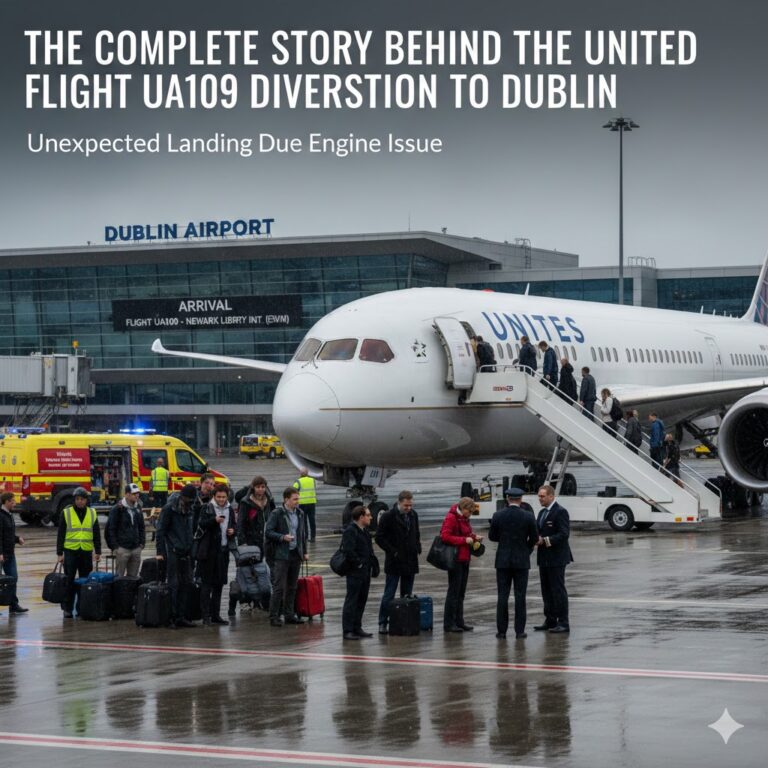
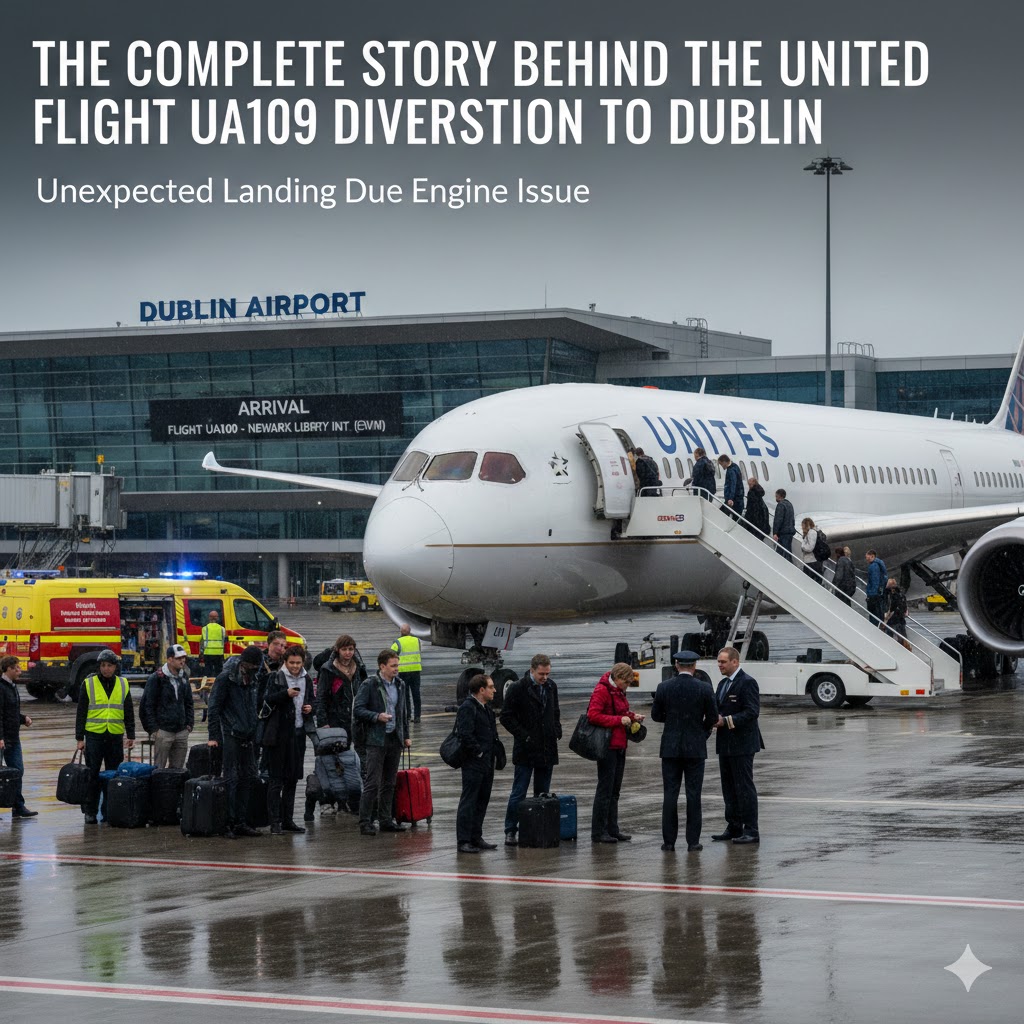
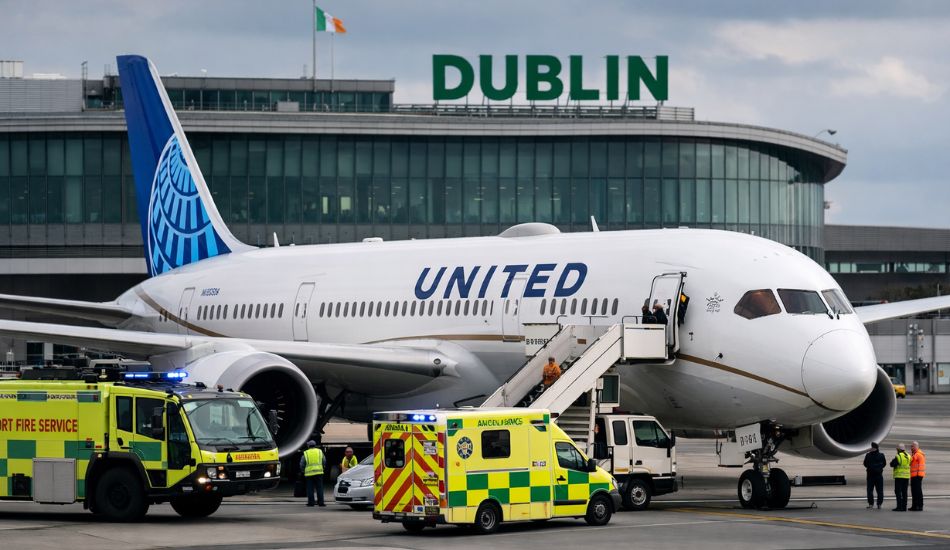
United Flight UA109 Diversion to Dublin – The Complete Story Behind the United Flight UA109 Diversion to Dublin -An unexpected turn over the Atlantic Ocean on October 30, 2025, transformed United Airlines Flight UA109 from a routine transatlantic journey into a case study in modern aviation safety protocols. While the Boeing 787-8 Dreamliner cruised from Munich to Washington D.C., a medical situation involving a flight attendant led to a decisive course change. This incident was not an emergency in the traditional sense but a textbook example of precautionary action, highlighting the intricate systems that keep air travel safe. This article provides a comprehensive breakdown of what happened, why the diversion to Dublin was necessary, and what it reveals about the unwavering safety culture in commercial aviation.
You Might Also Like: Liberty High School Gas Evacuation
The Incident at a Glance: Flight UA109 Diverts to Dublin
Before diving into the details, here are the verified facts of the incident presented in a clear summary.
A Detailed Timeline of the Diversion
The sequence of events demonstrates how efficiently such situations are managed in modern aviation.
- 12:14 PM CET (Oct. 30): Flight UA109 departs on schedule from Munich Airport.
- ~3 Hours into Flight: While cruising at 40,000 feet over the North Atlantic, roughly 500-600 nautical miles west of Ireland, a flight attendant reports becoming incapacitated due to severe pain from a blister.
- Decision Point: The captain, in consultation with United’s operations center, assesses the situation. The crew member’s condition means the flight no longer meets the legal minimum crew requirements. The decision is made to divert to the nearest suitable airport.
- ~3:00 PM GMT: The aircraft executes a U-turn over the ocean and lands safely at Dublin Airport (DUB).
- Ground Stop in Dublin: Medical personnel board the aircraft to treat the crew member, who does not require hospitalization. Passengers remain onboard while the aircraft is refueled and prepared for the onward journey.
- 4:15 PM GMT: UA109 departs Dublin to resume its flight to Washington D.C..
- 6:30 PM ET: The flight arrives at Washington Dulles International Airport (IAD), about two hours behind schedule.
Why a Medical Issue Can Ground a Flight: The Safety Protocol Explained
To the public, a blister might seem like a minor issue. In aviation, however, it triggered a significant operational decision rooted in strict international regulations.
Cabin crew are federally certified safety professionals, not just service attendants. Their mandated duties include managing emergency evacuations, fighting onboard fires, administering first aid, and controlling passengers during any abnormal situation. Aviation authorities like the FAA and EASA mandate a minimum number of fit and active crew members based on the aircraft type and passenger count.
When the flight attendant on UA109 became unable to perform these critical safety functions, the aircraft was no longer in compliance with these legal requirements. Continuing a long-haul flight over the remote North Atlantic without a full complement of operational crew was not a legal or safe option. The diversion was, therefore, a mandatory compliance action, not a discretionary choice.
Why Dublin? The Logic of ETOPS Diversion Planning
A common question is why the flight diverted to Dublin instead of returning to Munich or pushing on to North America. The answer lies in a critical aviation framework known as ETOPS (Extended-range Twin-engine Operational Performance Standards).
ETOPS regulations govern how twin-engine aircraft like the 787 can operate on long routes over water or remote areas. Before every such flight, airlines must pre-select designated alternate airports that can be reached within a specified flying time in case of an emergency. For the Munich-Washington route over the North Atlantic, Dublin Airport is a key ETOPS alternate.
When the medical issue arose, Dublin was the closest pre-approved airport that met all necessary criteria: it had the long runways needed for a 787, immediate medical facilities, efficient ground support for a quick turnaround, and customs processing capabilities. This pre-planning allowed for a swift, coordinated, and safe response.
Passenger Experience and Airline Response
For the approximately 200 passengers onboard, the diversion was an unexpected interruption. According to reports, the flight crew maintained clear communication, informing travelers of the situation and the reason for the diversion, which helped manage anxiety.
Passengers remained on the aircraft during the roughly 75-minute stop in Dublin. While inconvenient, the delay was minimized by the efficient ground operations. United Airlines followed standard procedures, and the flight continued to its final destination on the same aircraft. The overall handling has been cited as a professional example of managing such disruptions with minimal passenger impact.
Clearing Up Misinformation and Contextualizing the Event
In the immediate aftermath, some flight-tracking data and social media chatter incorrectly suggested the flight was headed to Boston. Verified sources and the airline confirmed Washington Dulles as the intended destination. This highlights how quickly unverified information can spread and the importance of relying on official channels.
Furthermore, diversions like this are far more common than most passengers realize. While they often go unreported in major news, medical emergencies (for both passengers and crew) are among the top reasons for unscheduled landings. In the months surrounding this event, United handled other diversions for issues like a cracked windshield and passenger misconduct, illustrating that such decisions are a routine part of risk management in aviation.
Key Takeaways: What UA109 Teaches Us About Aviation Safety
The diversion of United Flight UA109 was not a failure but a demonstration of a system working as designed. It underscores several core principles of modern aviation:
- Safety Over Schedule: Airlines prioritize compliance and precaution over convenience. A minor issue is addressed proactively before it can develop into a serious one.
- Crew are Integral to Safety: The health and readiness of the flight crew are as critical to safety as the mechanical health of the aircraft.
- Systematic Preparedness: Protocols like ETOPS ensure that for every phase of a long flight, a safe haven is within reach. Decisions are guided by pre-planned checklists and real-time expert consultation.
- Transparency Builds Trust: Effective communication from the flight deck during such events is essential for maintaining passenger calm and trust.
Conclusion: A Reassuring Example of Protocol in Action
The story of United Flight UA109’s diversion is ultimately a reassuring one. It involved a healthy aircraft, a professional crew making a measured decision, and a pre-planned safety net—Dublin Airport—functioning perfectly. The incident caused a minor delay but upheld the highest standards of safety and regulatory compliance. For travelers, it serves as a potent reminder that the aviation industry’s complex web of rules, training, and technology exists to protect them, demonstrating that when a flight changes course for such a reason, it is a sign of a robust and responsible safety culture in action.
Frequently Asked Questions (FAQs)
Q1: What was the exact reason United Flight UA109 diverted?
A1: The flight diverted due to a crew medical emergency. A flight attendant developed a severe blister that caused enough pain and incapacity to prevent them from performing their federally mandated safety duties.
Q2: When and where did this diversion happen?
A2: The diversion occurred on October 30, 2025. The aircraft, en route from Munich, Germany to Washington D.C., diverted to Dublin Airport in Ireland.
Q3: Was the Boeing 787 aircraft unsafe or damaged?
A3: No. All reports confirm the aircraft (registration N28912) was mechanically sound and experienced no technical issues. The diversion was solely due to the crew member’s medical condition and the legal crew requirement, not any problem with the plane.
Q4: Why did they choose to divert to Dublin specifically?
A4: Dublin is a designated ETOPS alternate airport for North Atlantic routes. It was the closest suitable airport with the necessary long runways for a 787, immediate medical facilities, and efficient ground support to handle the situation and allow for a quick turnaround.
Q5: What is ETOPS?
A5: ETOPS (Extended-range Twin-engine Operational Performance Standards) are regulations that allow twin-engine aircraft to fly long distances over water. They require airlines to pre-plan and designate specific alternate airports that can be reached within a set time during any phase of the flight in case of an emergency.
Q6: How long was the flight delayed?
A6: The total delay was approximately two hours. The aircraft landed in Washington Dulles around 6:30 PM ET instead of the originally scheduled time.
Q7: Did passengers have to get off the plane in Dublin?
A7: No. Reports indicate passengers remained onboard the aircraft during the medical assessment and refueling stop in Dublin. This helped minimize the overall delay.
Q8: Can a sick flight attendant really force a flight to divert?
A8: Yes. Aviation regulations require a minimum number of fully fit and active cabin crew to be onboard to handle emergency evacuations and other safety-critical tasks. If the crew falls below this legal minimum, the flight cannot legally continue.
Q9: Was this diversion an emergency landing?
A9: It was a precautionary diversion, not an emergency landing. The situation was not life-threatening, but it required a resolution to maintain legal and operational safety compliance. The landing in Dublin was normal and controlled.
Q10: How common are flight diversions like this?
A10: Medical diversions are relatively common in commercial aviation, though most involve passengers rather than crew. Diversions occur daily worldwide for various reasons including medical issues, minor technical indications, or weather.
Q11: How did United Airlines handle the situation?
A11: By all accounts, United handled the situation professionally. The flight crew made a timely decision, communicated with passengers, and coordinated with ground teams in Dublin for a swift resolution, allowing the flight to continue with minimal disruption.
Q12: I heard the flight was going to Boston, not Washington. Is that true?
A12: That was early misinformation. Official flight plans, airline statements, and verified tracking data all confirm that Washington Dulles (IAD) was the scheduled destination for UA109 on October 30, 2025.