Introduction: What is Wingfoiling?
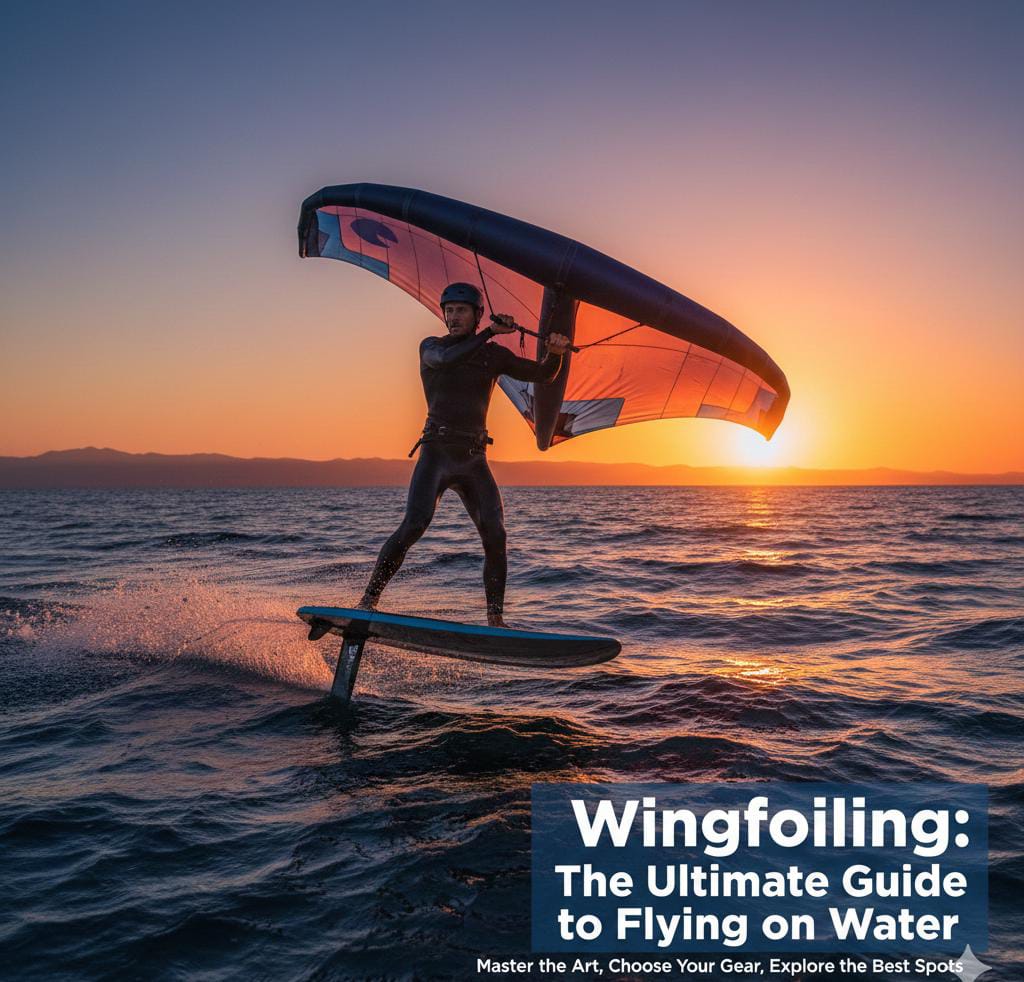
Wingfoiling is an exhilarating wind-powered water sport that blends elements of windsurfing, kiteboarding, and surfing into a uniquely liberating experience. A rider stands on a specialized board equipped with a hydrofoil—a wing-like structure that lifts the board out of the water as speed increases. In their hands, they hold a lightweight, handheld inflatable wing to catch the wind for propulsion. The result is a sensation of smooth, silent flight above the water’s surface.
The sport’s appeal lies in its versatility and accessibility. Compared to other wind sports, wingfoiling requires less space, can be learned relatively quickly, and offers an unmatched feeling of freedom. It has rapidly evolved from a niche experiment into a global phenomenon with a passionate community, competitive world tours, and constantly innovating equipment.
You Might Also Like: Padel Racket
The Wingfoil Revolution: How It Compares to Other Wind Sports
To understand wingfoiling’s unique place, it’s helpful to compare it to its closest relatives. Each sport offers a different relationship with the wind and water.
Your First Wingfoil Setup: A Beginner’s Gear Guide
Choosing the right beginner equipment is the single most important factor for a fast and enjoyable learning experience. Oversized, stable gear builds confidence and reduces frustration.
1. The Wing Foil Board: Your Floating Platform
The board is your stable platform for learning. As a beginner, you need significant volume to make standing, balancing, and starting easier.
- Volume Formula: A solid rule is your body weight in kilograms plus 30-40 liters. For example, an 85kg (187lb) rider should start with a 115-125L board.
- Shape & Type: Beginner boards are wide and thick for stability. While inflatable boards are travel-friendly, hard boards generally offer better performance for progression.
2. The Hydrofoil: The Engine of Flight
The foil, mounted under the board, generates lift. A beginner foil setup prioritizes stability and early lift.
- Front Wing Size: Start with a large front wing (1800-2200 cm² is ideal for most adults). This creates more lift at lower speeds, making it easier to get “on foil”.
- Mast Length: Begin with a shorter mast (70-75cm). This keeps you closer to the water, makes falls less intimidating, and reduces the “pendulum effect” while learning balance.
- Fuselage: A longer fuselage provides more stability and forgiveness, which is exactly what a new rider needs.
3. The Wing: Your Sail and Steering Wheel
The inflatable wing is your source of power and control.
- Beginner Size: For most adults learning in 10-20 knot winds, a 5m² to 6m² wing is a versatile starting point. Lighter riders can go smaller, heavier riders may start larger.
- Handles vs. Boom: Most modern beginner wings use soft handles, which are easier to pack and manage. Booms, reminiscent of windsurfing, offer a rigid feel and hand positions but can be less forgiving.
- Your First “Quiver”: A great starter combination is a larger wing (e.g., 6m) for lighter wind days and a smaller one (e.g., 4m) for windier conditions.
The Golden Rule of Safety: Wingfoil with Awareness
Wingfoiling is incredibly fun but demands respect for the power of nature and your equipment. The hydrofoil is sharp and moves quickly—safety is non-negotiable.
Pre-Session Checks (On Land)
- Check Conditions & Forecast: Never go out in offshore winds (wind blowing from land to sea), as it can blow you irretrievably out. Ideal learning conditions are side-shore winds in flat, shallow water.
- Inspect Your Gear: Check leashes for wear, ensure the foil is tightly screwed to the board, and inflate the wing to the recommended PSI.
- Scan the Environment: Identify hazards like rocks, swimmers, other craft, and your safe return point.
Essential Safety Gear (Never Skip These)
- Helmet: Protects your head from impacts with your board, foil, or the bottom.
- Impact Vest: Provides buoyancy, warmth, and crucial protection for your torso during falls.
- Leashes: Always use a board leash and a wing leash. A loose board can become a dangerous projectile.
- Communication: Tell someone your plan and location. Consider carrying a mobile phone in a waterproof case.
The Path to Flight: A Structured Learning Progression
Following a logical progression is the fastest way to success. Rushing to fly before mastering the fundamentals leads to frustration.
Step 1: Master the Wing on Land
Before getting in the water, practice handling the wing on the beach. Learn to catch the wind, generate power, and “de-power” it by letting the wing flap (“luffing”). Practice switching hands and moving with the wing. This builds muscle memory and confidence.
Step 2: “Wingsurfing” on the Board
Start in knee-deep water with your foil board, but without the foil attached (use a center fin if possible). Get comfortable kneeling, then standing on the board while using the wing to sail around. Focus on:
- Stance and Balance: Keeping a low, athletic posture.
- Steering and Control: Learning how to turn and control your speed.
- Sailing Upwind: The foundational skill of not just drifting downwind.
Step 3: Taxiing and Taking Off
Now attach the foil with a short mast. Your goal is to get the board “planing” on the water surface (called “taxiing”) before attempting to fly. Practice generating enough speed with the wing so the board feels light. As you gain confidence and speed, you’ll feel the foil begin to lift. Use small body movements to control this lift before committing to full flight.
Step 4: Your First Flights and Beyond
Your first sustained flight is a magical moment. Focus on small, controlled flights. Keep your eyes on the horizon (not your feet), and use subtle weight shifts on your front and back foot to control pitch (up/down angle). As flights get longer, practice gentle turns. Falling is a guaranteed part of the process—learn to fall away from your equipment to avoid injury.
Navigating the World of Wingfoil Brands
The equipment market is rich with options, from premium innovators to value champions. Here’s a guide to notable brands as of 2025.
- Premium Performance & Innovation: F-One is renowned as a technical leader with interchangeable handle systems. Duotone offers German-engineered excellence and user-friendly performance. CORE specializes in ultra-light, stiff wings using premium Aluula material.
- All-Rounders & Value: Slingshot is a top choice for beginners and value-seekers, often including booms and offering great performance per dollar. Cabrinha, with deep surf heritage, makes excellent intermediate wings known for comfort and control. Gong is celebrated for creative engineering and high quality at reasonable prices.
- Specialists: Naish leverages decades of surf and windsurf expertise for wave-focused gear. Ocean Rodeo builds bombproof equipment designed for harsh conditions and durability.
Frequently Asked Questions (FAQs)
1. How long does it take to learn wingfoiling?
With proper instruction and suitable beginner gear, most people can achieve their first short flights within 5 to 30 hours of practice. Previous experience in board or wind sports significantly speeds up the process.
2. Do I need lessons?
Absolutely. A few professional lessons are the best investment you can make. They accelerate learning, instill proper technique, and, most importantly, teach critical safety skills.
3. What wind speed do I need to start?
Ideal learning conditions are steady winds between 15-20 knots (17-23 mph). This provides enough power without being overwhelming.
4. Can I wingfoil on a lake?
Yes! Lakes are often perfect learning grounds due to generally flat water and consistent wind. Just ensure the area is large enough and free of obstructions.
5. Is wingfoiling dangerous?
Like any adventure sport, it carries risks. However, by using proper safety gear (helmet, impact vest), learning in safe conditions, and respecting your limits, you can manage and minimize these risks effectively.
6. How much does a complete beginner setup cost?
A new, complete setup (board, foil, wing, accessories) typically ranges from $2,000 to $3,500 USD. Buying used gear from a reputable source can cut costs significantly.
7. What should I wear?
A wetsuit appropriate for your local water temperature is essential for warmth and protection. Always wear a helmet and impact vest.
8. What’s the difference between a wing and a kite?
A wing is held directly in your hands, giving you immediate, intuitive control. A kite is attached to you via long lines and a control bar, offering tremendous power for jumps but requiring more space and having a steeper initial learning curve.
9. How do I transport my gear?
Wingfoil gear is relatively compact. The wing deflates and packs into a backpack. The foil breaks down, and the board can often fit in or on a car.
10. What’s “pumping” in wingfoiling?
Pumping refers to using rhythmic body movements and wing motions to generate momentum, either to get on foil in light wind or to maintain speed through lulls.
Conclusion
Wingfoiling represents the cutting edge of wind-powered water sports, offering an unparalleled sense of freedom and connection with the elements. Its relatively accessible learning curve, versatility across conditions, and compact gear have fueled its explosive growth. Success in this sport hinges on three pillars: selecting the right beginner-friendly equipment, committing to a safe, structured learning progression, and continuously respecting the marine environment.
Whether you’re drawn to the silent glide over flat water, the thrill of carving ocean swells, or the friendly community, wingfoiling opens up a new world on the water. Start with a lesson, prioritize safety, and prepare to be captivated by the feeling of flight. The journey from your first wobbly stance to your first smooth, soaring carve is one of the most rewarding adventures you can have on the water.
For more updates, please visit newstimesports.com